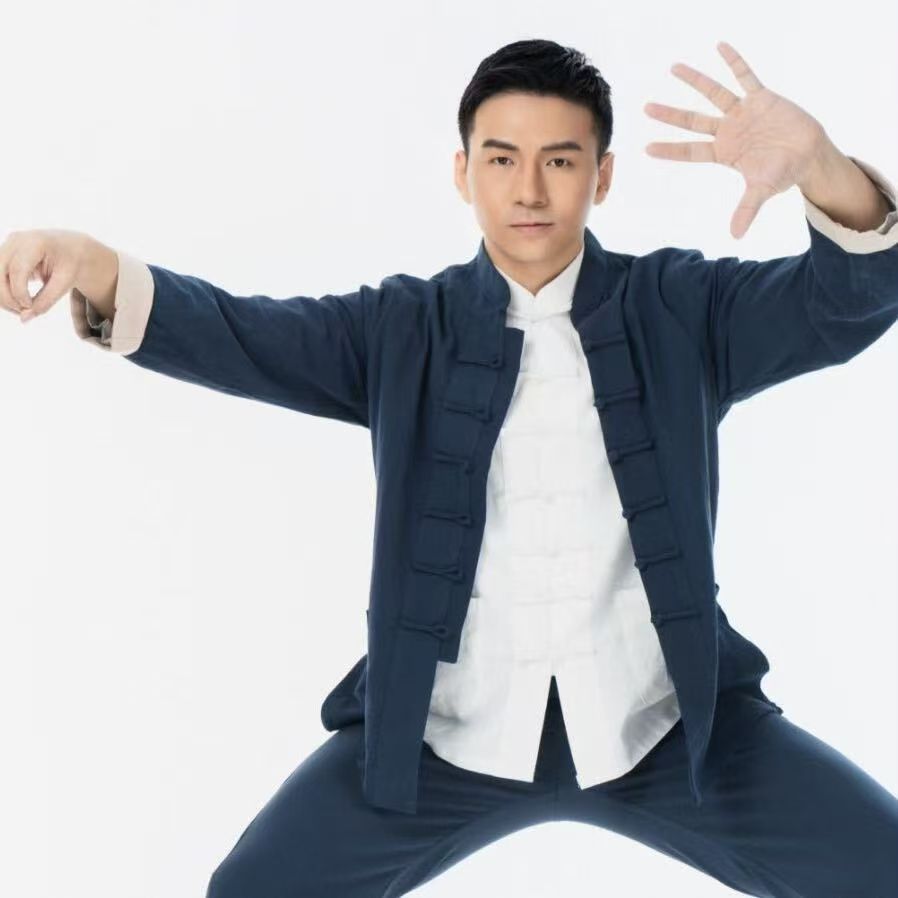
You may have seen people practising Tai Chi in a park: moving slowly, turning their bodies, and opening and closing their arms. How does this connect with the Yin and Yang we explored earlier?
Tai Chi is a traditional Chinese martial art. Common forms of practice combine continuous movements with breathing and attention to learn how the body coordinates change.
When taking a step, for example, one leg bears more weight while the other prepares to move. As your weight shifts, the roles of the two legs change. This helps us understand the relationship between empty and full, or xu and shi, in Tai Chi.
Opening and closing, movement and stillness, do not work separately. They work together within a movement, making Yin and Yang a relationship you can observe rather than an abstract idea.
Practising Tai Chi involves learning specific movements. A teacher’s guidance can help you recognize posture, support and transitions.
Related reading
Yin & Yang
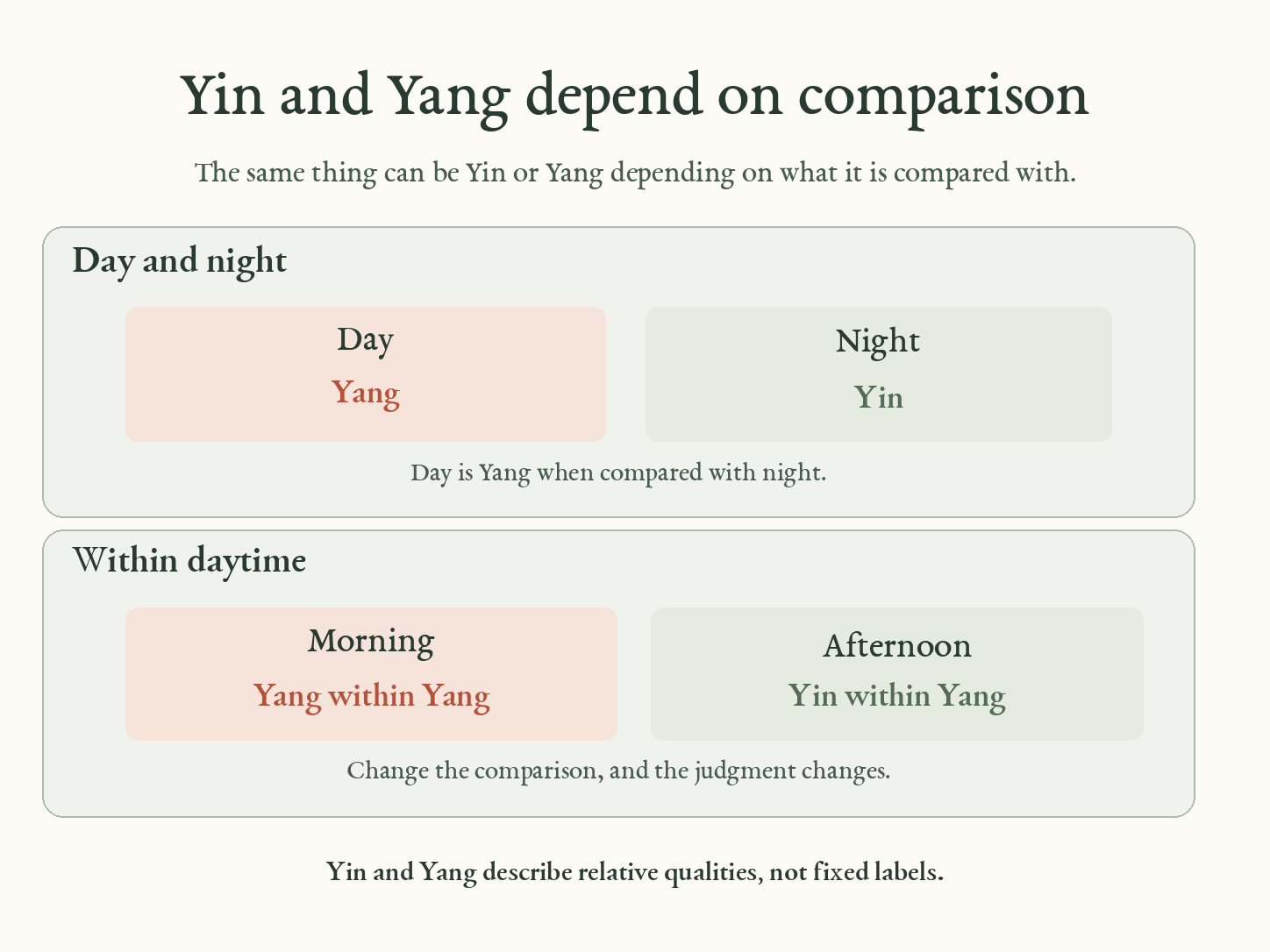
Yin and Yang Meaning: What Yin and Yang Actually Mean in Traditional Chinese Medicine
Learn what Yin and Yang mean in Traditional Chinese Medicine, why their qualities are relative, and how comparison changes the way they are understood.
Read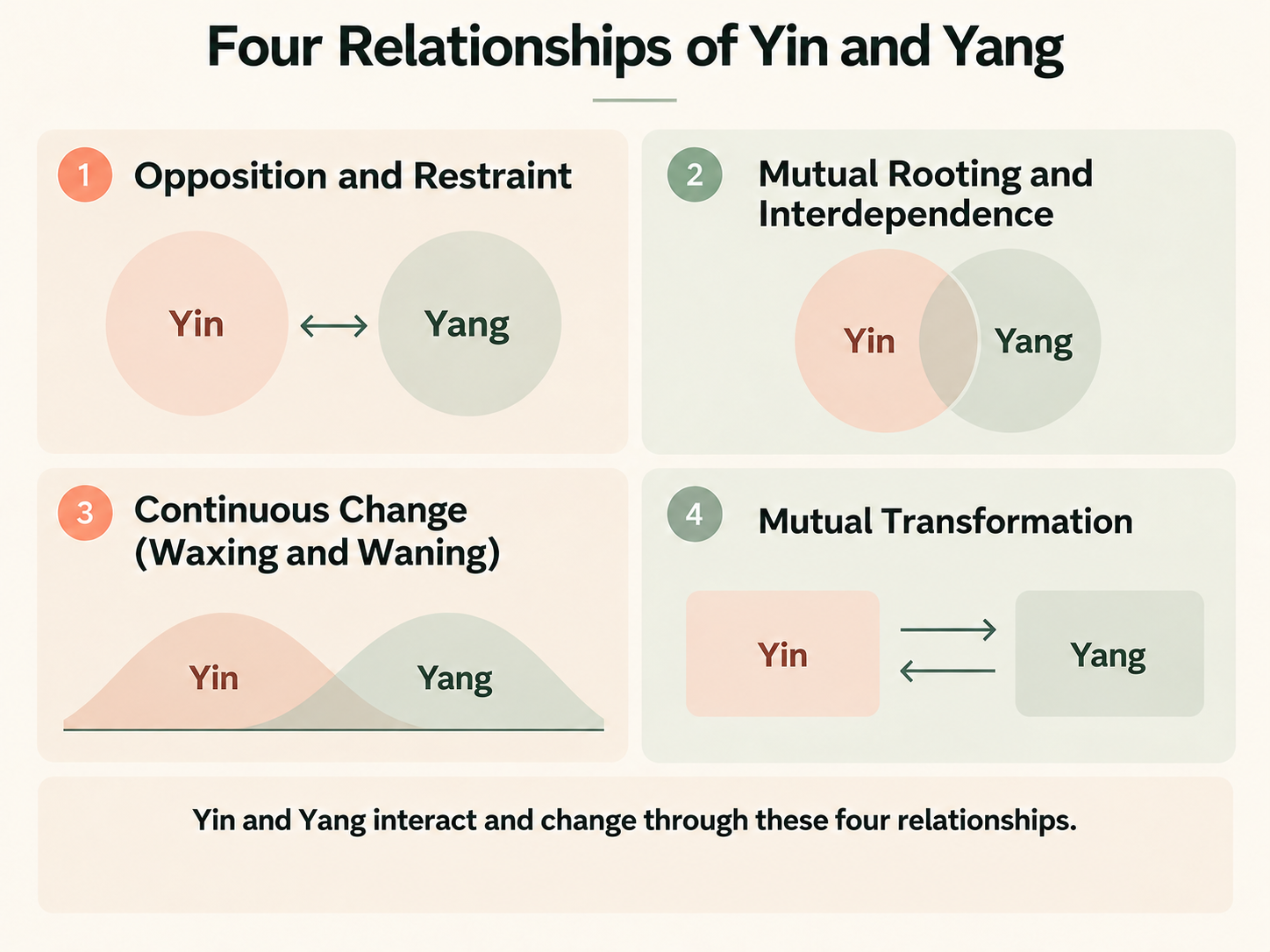
Yin & Yang
How Yin and Yang Relate: Four Core Relationships in Traditional Chinese Medicine
Understand four core Yin–Yang relationships in Traditional Chinese Medicine: opposition and restraint, interdependence, waxing and waning, and transformation.
Read