Autumn arrives, and the weather begins to cool. Some people notice that their throat feels dry when they wake up, their lips chap more easily, or their skin feels less moisturized than it did in summer.
In everyday Chinese life, seasonal changes are not just about changing what we wear. They often mean changing what appears on the dining table, too.
In autumn, for example, some families prepare pear soup, tremella soup, or other warm, brothy dishes.
Why autumn in particular?
Behind this habit is a traditional Chinese way of understanding the relationship between seasons, the body, and food.
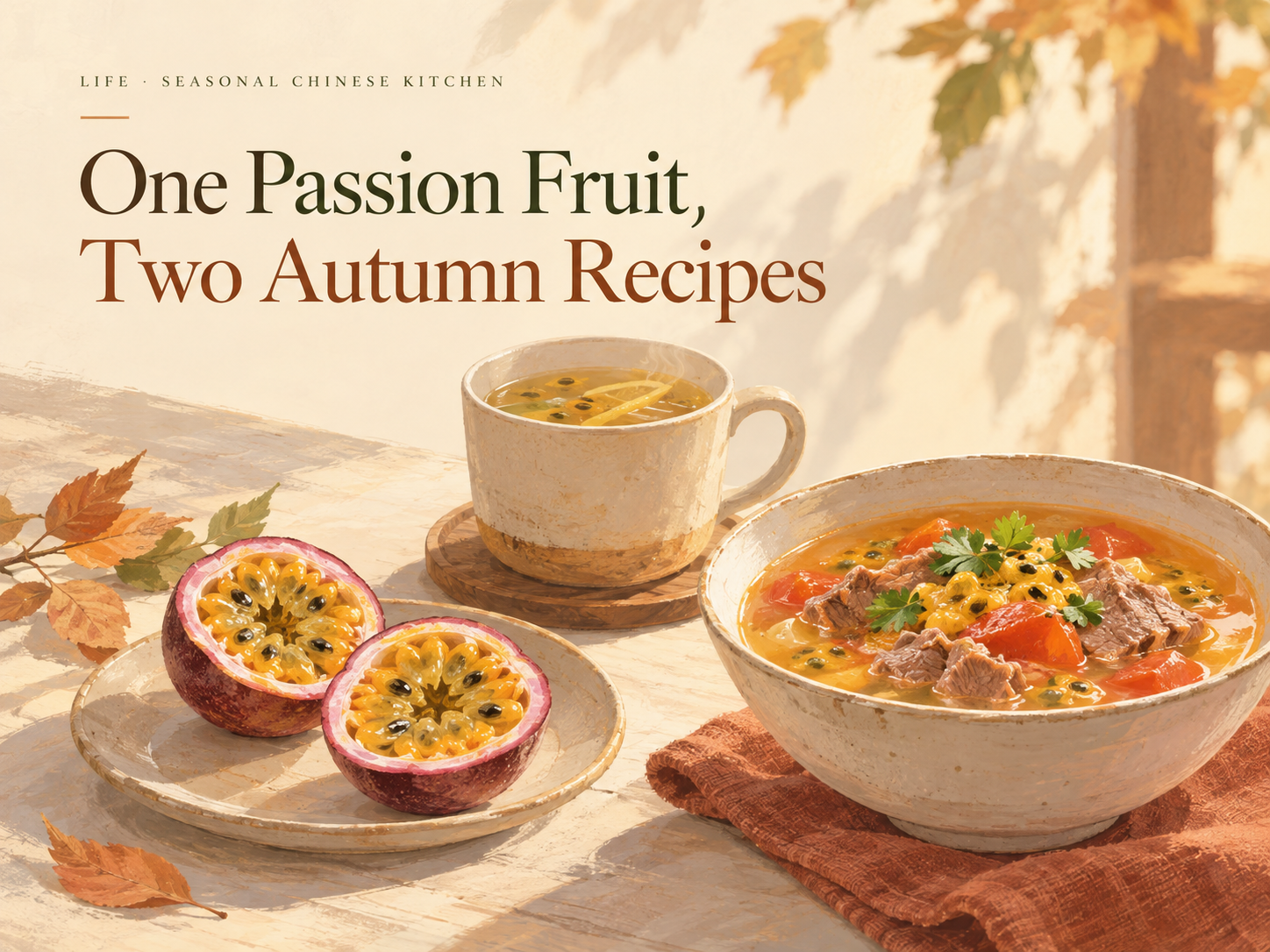
Today, let's begin with the sweet-and-tart passion fruit.
1. Why Does Traditional Chinese Medicine Pay Special Attention to Dryness in Autumn?
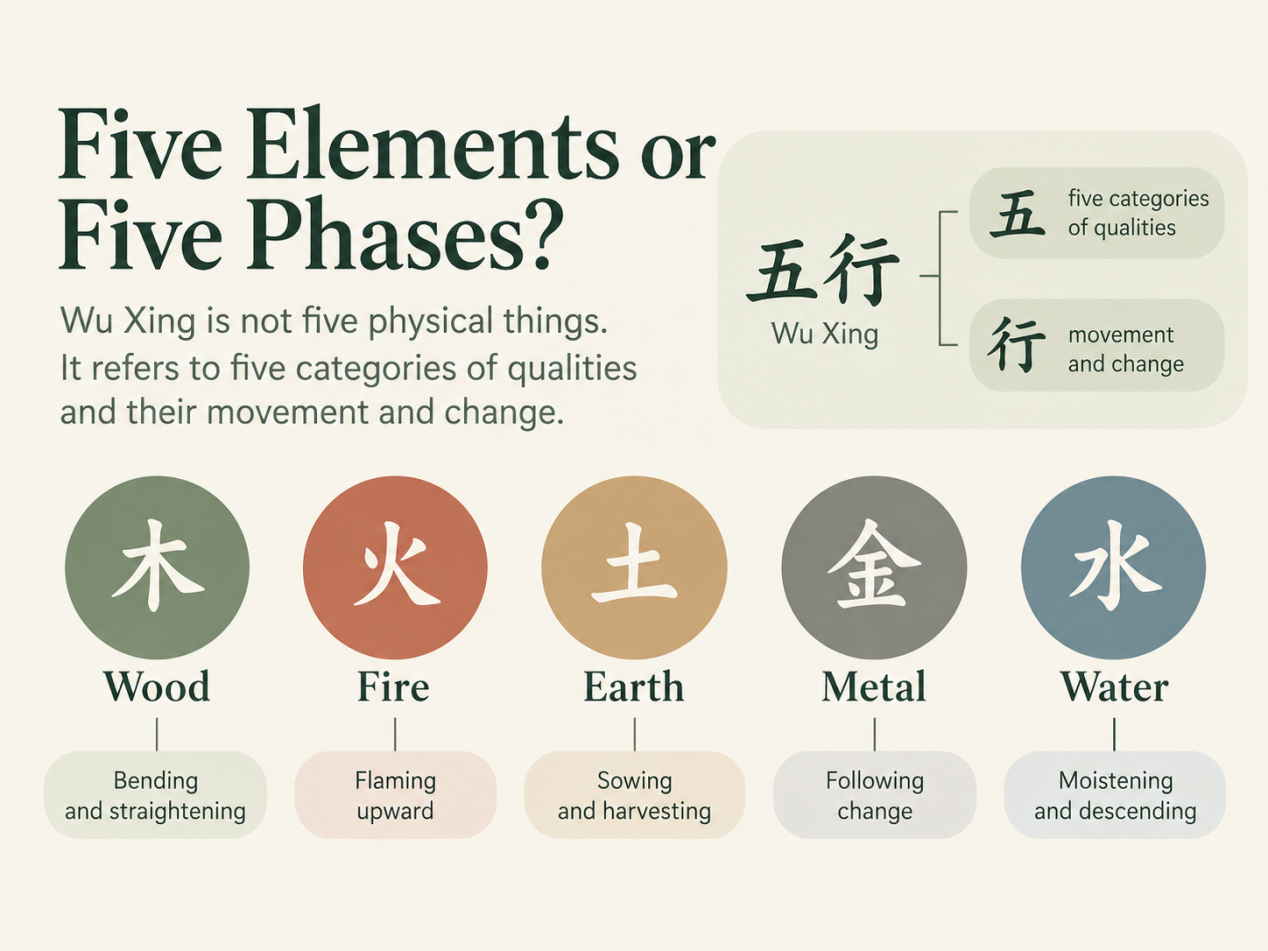
Traditional Chinese Medicine (TCM) understands the changes of the natural world in relation to the activities of the human body.
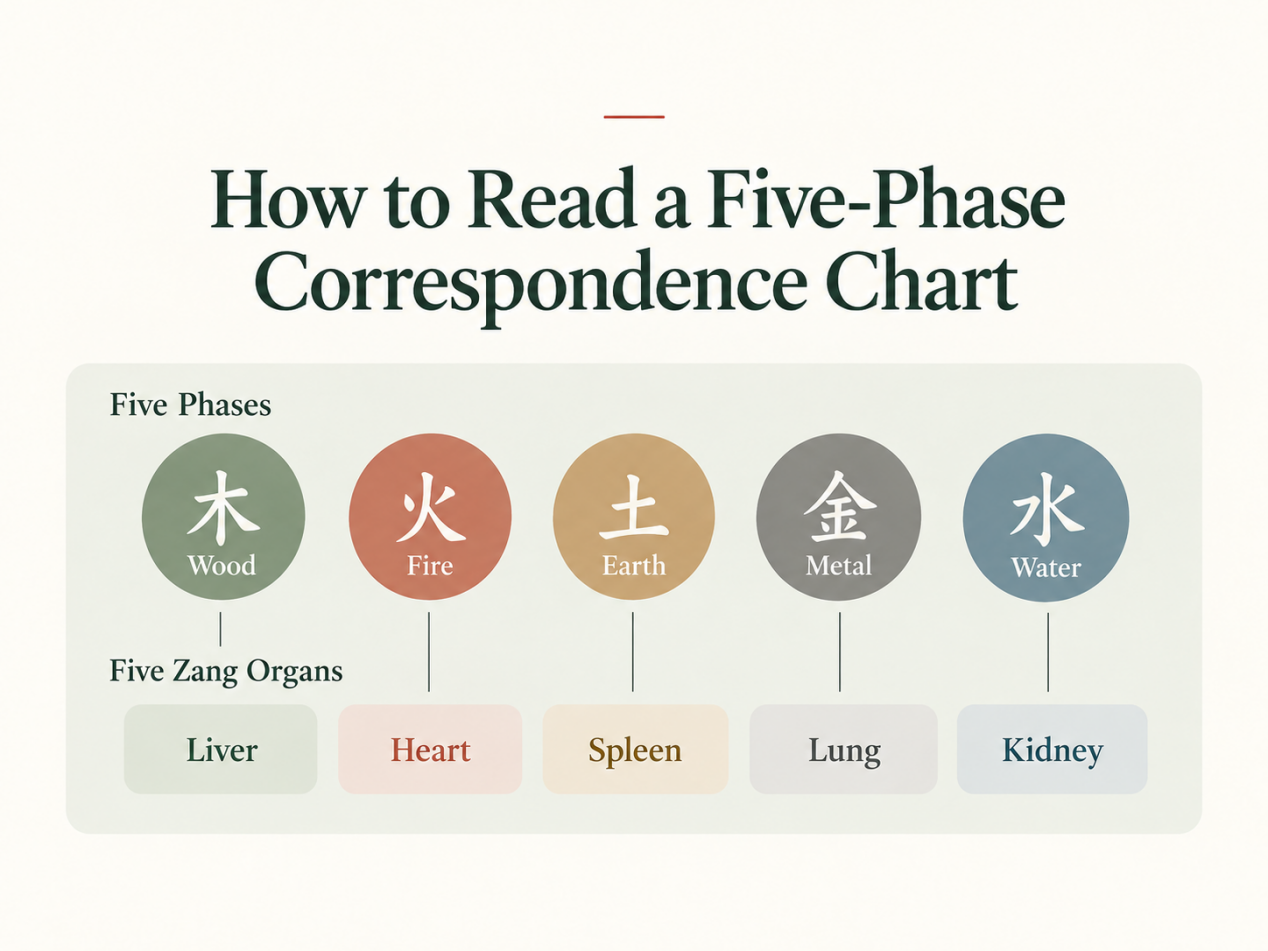
In the Five Phases framework, autumn corresponds to Metal, and the associated organ is the Lung.
One of autumn's defining qualities is gathering inward. After the emergence of spring and the growth of summer, the natural world begins to turn toward contraction and storage.
At the same time, in the traditional classification of seasonal climates, dryness is the dominant influence associated with autumn.
The Huangdi Neijing (Yellow Emperor's Inner Classic), in its Suwen section, states:
“When dryness prevails, things become dry.”
This means that when dryness becomes excessive, signs of insufficient moisture may appear.
TCM associates the Lung with autumn and describes the Lung as favoring moisture rather than dryness.
For this reason, traditional discussions of autumn often pay particular attention to dryness affecting the nose, throat, and skin.
However, autumn does not feel the same everywhere.
Autumn in northern China may be noticeably dry, while parts of southern China can remain warm and humid. People living in other countries may experience very different seasonal conditions.
So, understanding Chinese seasonal eating is not about mechanically eating certain foods according to a calendar. It is about observing the actual changes in the environment around you.
2. Why Is Autumn Dryness So Closely Connected with Body Fluids?
If we remember only the traditional advice to “moisten the Lung in autumn,” we may still miss the reasoning behind it.
An important concept here is jinye (津液), or body fluids.
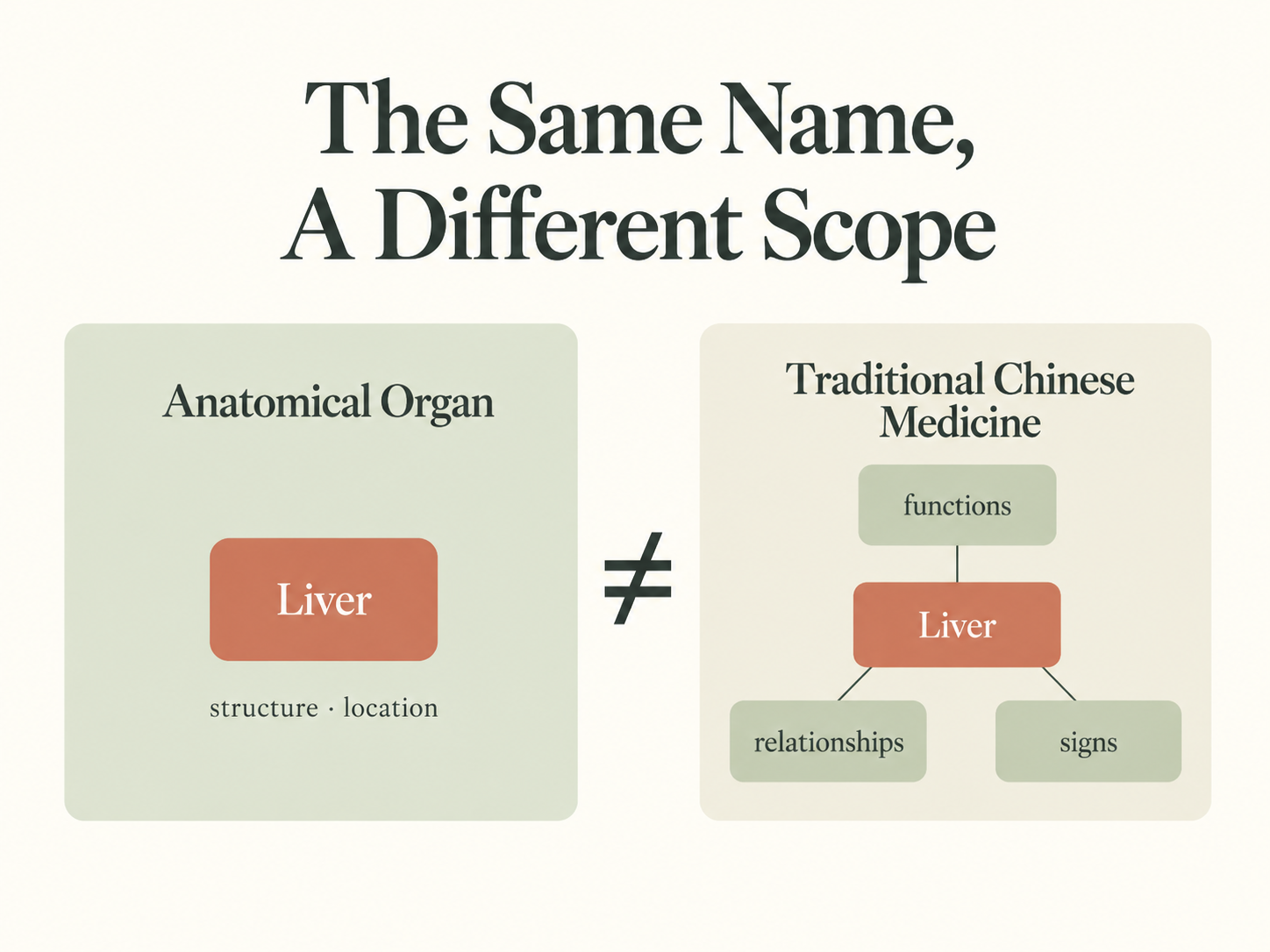
In TCM, body fluids refer collectively to the body's normal fluids, understood as moistening and nourishing the organs, muscles, skin, and bodily openings.
TCM also distinguishes between jin and ye.
Jin is relatively thin and moves more freely, while ye is relatively thick and less mobile. Both contribute to moistening and nourishing the body.
According to TCM theory, excessive dryness can damage body fluids.
When the body loses sufficient moisture, signs such as a dry mouth, dry throat, or dry skin may appear.
But two situations need to be distinguished.
One involves the effects of dry conditions in the external environment, traditionally called external dryness.
The other involves insufficient body fluids within the body, traditionally called internal dryness.
The two may be related, but they are not the same thing.
This also explains why traditional Chinese food practices do not simply assume that anyone with a dry mouth needs to eat a particular “Lung-moistening” food.
TCM also considers the environment, the person's overall condition, and the specific reasons behind the dryness.
Everyday food practices can be part of daily care, but they cannot replace an assessment of a health problem.
3. Why Choose Passion Fruit for an Autumn Recipe?
Passion fruit, also known in Chinese as jidan guo (鸡蛋果), has golden-yellow or orange pulp filled with numerous dark seeds. It has a distinctive sweet-and-tart flavor and a strong, fragrant aroma.
Originally from South America, passion fruit was not a fruit traditionally found in ancient China.
That makes it an interesting example.
Traditional Chinese food practices do not require every ingredient to have originated in ancient China. As new foods become part of Chinese family life, people also explore them through familiar cooking methods and traditional ideas about food.
Passion fruit is one such ingredient.
Its pulp can be eaten directly, mixed with water and honey, or used to add a fragrant, tart flavor to soups and savory dishes.
From the perspective of modern nutrition, passion fruit contains water, dietary fiber, organic acids, and vitamins.
From the perspective of traditional seasonal eating, its sweet-and-tart flavor and different culinary uses offer a way to explore how Chinese families respond to seasonal changes through food.
An important distinction is worth making:
A food's flavor, its interpretation within traditional dietary practices, and its scientifically demonstrated health effects are three different things.
For example, even if some traditional or folk sources mention calming uses associated with passion fruit, that does not mean a cup of passion fruit drink has been shown to treat insomnia.
As an everyday ingredient, however, passion fruit can certainly find a place in the home kitchen.
Here are two simple ways to use it.
4. Recipe One: Warm Passion Fruit Drink with Honey
This is the simplest of the two recipes.
Passion fruit's bright, tart aroma pairs with a little honey to make a warm drink that requires no complicated preparation.
Ingredients
- 1 passion fruit
- Approximately 200 ml warm water
- 1 teaspoon honey, adjusted to taste
Instructions
Step 1: Scoop out the pulp
Wash the outside of the passion fruit, cut it open, and use a spoon to scoop out the pulp and seeds.
Step 2: Add warm water
Place the pulp in a cup, pour in the warm water, and stir gently.
Step 3: Adjust the flavor
Add a little honey and stir again.
If you enjoy tart flavors, you can leave the honey out.
Step 4: Enjoy slowly
Your fragrant, sweet-and-tart passion fruit drink is ready.
What Makes This Drink Special?
It does not need to be given extraordinary health claims.
For someone who finds plain water unappealing, the aroma and flavor of passion fruit can offer another enjoyable way to drink water throughout the day.
Preparing fruit as a warm drink also reflects a familiar practice in Chinese home cooking: adjusting the temperature and preparation of food according to the weather, personal taste, and everyday habits.
Passion fruit is naturally acidic. People who experience acid reflux or are sensitive to acidic foods may prefer to use less or choose another drink.
Honey is optional, and it must not be given to infants under one year of age.
5. Recipe Two: Passion Fruit and Beef in Sour Broth
Passion fruit is not just for drinks. It can also be used in savory cooking.
Its tart, fragrant flavor works well with tomatoes and beef. You can also add vegetables according to your preferences to make a light, flavorful sour broth.
This is another interesting idea in Chinese home cooking: fruit can be used to flavor a savory dish instead of being reserved for dessert.
Ingredients (Serves Approximately Two)
Main ingredients
- 200–250 g thinly sliced beef
- 2 passion fruits
- 1 tomato
- 2 slices ginger
- 1 clove garlic
- A little salt
- A little cooking oil
- Approximately 400–500 ml water
Optional additions
- Enoki mushrooms
- Leafy greens
- Other vegetables you enjoy
The vegetables are entirely optional. You can leave them out or use whatever suitable ingredients you already have at home.
Choose a cut of beef suitable for quick cooking.
Instructions
Step 1: Prepare the ingredients
Thinly slice the beef and cut the tomato into pieces.
Cut open the passion fruits and scoop out the pulp.
If you are adding vegetables, wash and prepare them in advance.
Step 2: Build the sour broth
Add a little oil to a pot and briefly sauté the ginger and garlic until fragrant.
Add the tomato and cook until it begins to soften and release its juices.
Pour in the water and bring to a boil.
Step 3: Add vegetables if you like
If using enoki mushrooms, add them to the broth and cook thoroughly.
If using quick-cooking leafy greens, you can add them later.
If you are not adding vegetables, simply move on to the next step.
Step 4: Cook the beef
Add the beef slices separately to the broth so they do not clump together.
Cook until the beef is fully cooked.
If you are using quick-cooking leafy greens, add them at this stage and cook until done.
Step 5: Add the passion fruit
Reduce the heat to low, or turn it off, and stir in the passion fruit pulp.
Season with a little salt to taste.
Because passion fruit already has a pronounced tart flavor, you may not need any additional vinegar or lemon juice.
What Makes This Dish Special?
The tomato and passion fruit create a fragrant, tart broth, while the beef provides protein. Optional vegetables add variety in both flavor and texture.
This is a home-cooked dish that can form part of an ordinary meal.
Compared with drinking fruit juice alone, using passion fruit in cooking allows it to become part of a more complete meal.
It is not a special medical treatment, and the addition of passion fruit does not make it a medicinal dish that treats autumn dryness or improves sleep.
What it does offer is a practical, flavorful way to bring a seasonal food idea into everyday family cooking.
6. What Passion Fruit Can Tell Us About Chinese Seasonal Eating
In everyday Chinese life, adjusting food choices as the seasons change is a familiar habit.
From a warm passion fruit drink to a tangy beef broth, these two recipes show both simple home-cooking practices and how TCM connects the seasons with the Lung and body fluids.
Living in tune with the seasons does not mean eating one prescribed food. It means adjusting everyday meals and habits according to changes in the environment and your own needs.
References
- Huangdi Neijing, Suwen (Basic Questions): “Yin Yang Ying Xiang Da Lun” and “Si Qi Tiao Shen Da Lun,” among other discussions of dryness, seasonal change, and seasonal self-care.
- Basic Theory of Traditional Chinese Medicine (Zhongyi Jichu Lilun): Sections on the Five Phases and seasons, the Lung's correspondence with autumn, the nature of dryness, the functions of body fluids, and body-fluid deficiency.
- Fujian Yaowu Zhi and Xinhua Bencao Gangyao: Specific entries, botanical identification, and descriptions of passion fruit require verification against the relevant original editions. Unverified passages are not quoted here.
- U.S. National Center for Complementary and Integrative Health (NCCIH): Information about Passiflora species and related health research. Edible passion fruit should be distinguished from medicinal passionflower preparations.
This article introduces traditional food culture and home-cooking practices. It does not provide diagnosis or treatment advice for specific medical conditions.