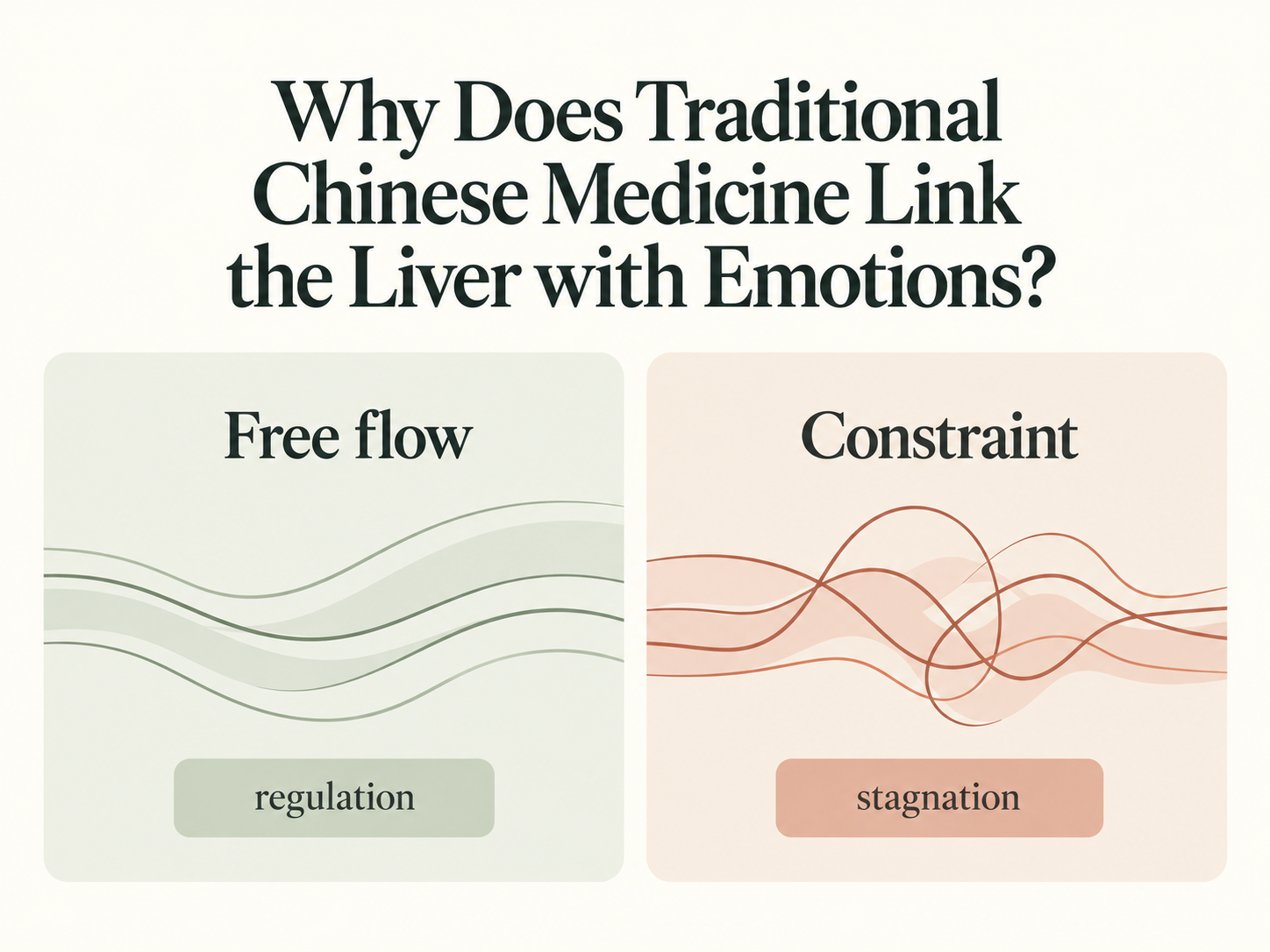
In the previous article, we saw that the Liver can be connected with Wood, Spring, the eyes, the sinews and anger.
That raises an obvious question:
When Traditional Chinese Medicine says “Liver,” does it mean the anatomical liver?
The short answer is:
It includes a relationship with the physical organ, but it is not limited to that anatomical structure.
The same is true when Traditional Chinese Medicine speaks about the Heart, Spleen, Lung and Kidney.
The names may look familiar.
The concepts behind them are broader.
The same name can have a different scope
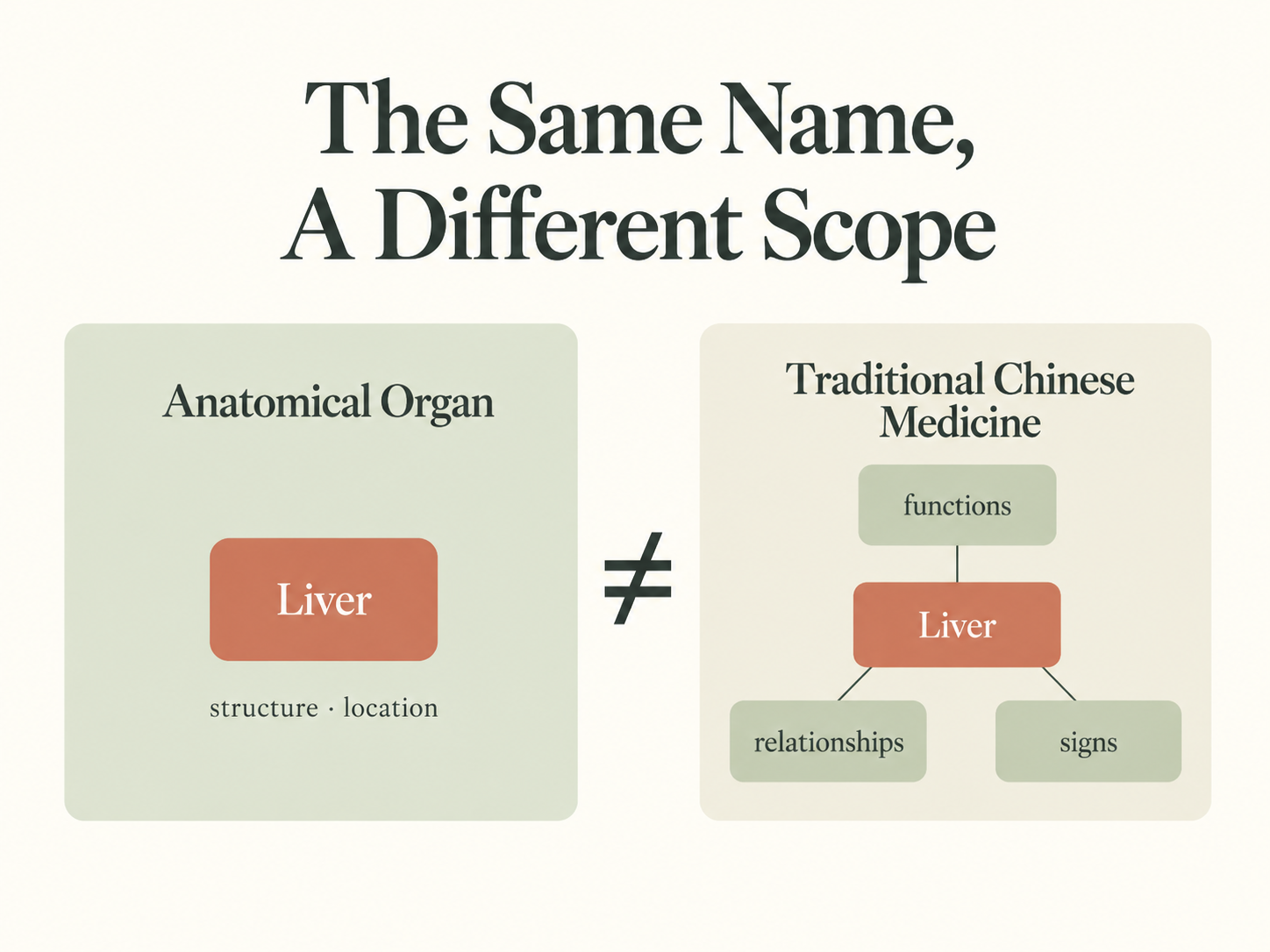
In modern anatomy, an organ is identified primarily by its physical structure and location in the body.
Traditional Chinese Medicine also developed from observation of the physical body. Its understanding of the internal organs was not created without anatomical knowledge.
But Traditional Chinese Medicine did not stop at anatomical structure.
It also observed what different parts of the body seemed to do, how they related to one another, and what could be seen or experienced outside the body.
This became part of a traditional idea called zangxiang, 藏象.
“Zang,” 藏, refers to what is stored within the body — the internal organs, together with their functional activities.
“Xiang,” 象, refers to what becomes visible or observable through their activity.
So the traditional understanding of an internal organ developed from more than one kind of observation:
its physical form,
its functions,
its relationships with other parts of the body,
and the signs through which those activities were thought to appear.
Take the Liver as an example
The anatomical liver is a physical organ.
The Liver in Traditional Chinese Medicine includes that physical reference, but the traditional concept extends further.
Within the five-zang system, the Liver is connected with the Gallbladder, the sinews and the eyes.
That does not mean the eyes or sinews are literally parts of the anatomical liver.
It means that, within this traditional model, they are understood as belonging to the same network of relationships.
This is why simply translating the Chinese word 肝 as “liver” can sometimes be misleading.
The English word is not wrong.
But the reader needs to know that the scope of the concept is different.
This is not a choice between anatomy and symbolism
There is another misunderstanding worth avoiding.
It would also be inaccurate to say that Traditional Chinese Medicine organ names are purely symbolic and have nothing to do with real organs.
Traditional descriptions of the organs included observations of their physical form.
At the same time, those observations were combined with broader ideas about function and relationships.
So the difference is not:
real organ versus imaginary organ.
It is closer to:
the anatomical organ versus a traditional organ concept whose meaning extends beyond anatomy alone.
That distinction matters.
Why this matters when you read Traditional Chinese Medicine
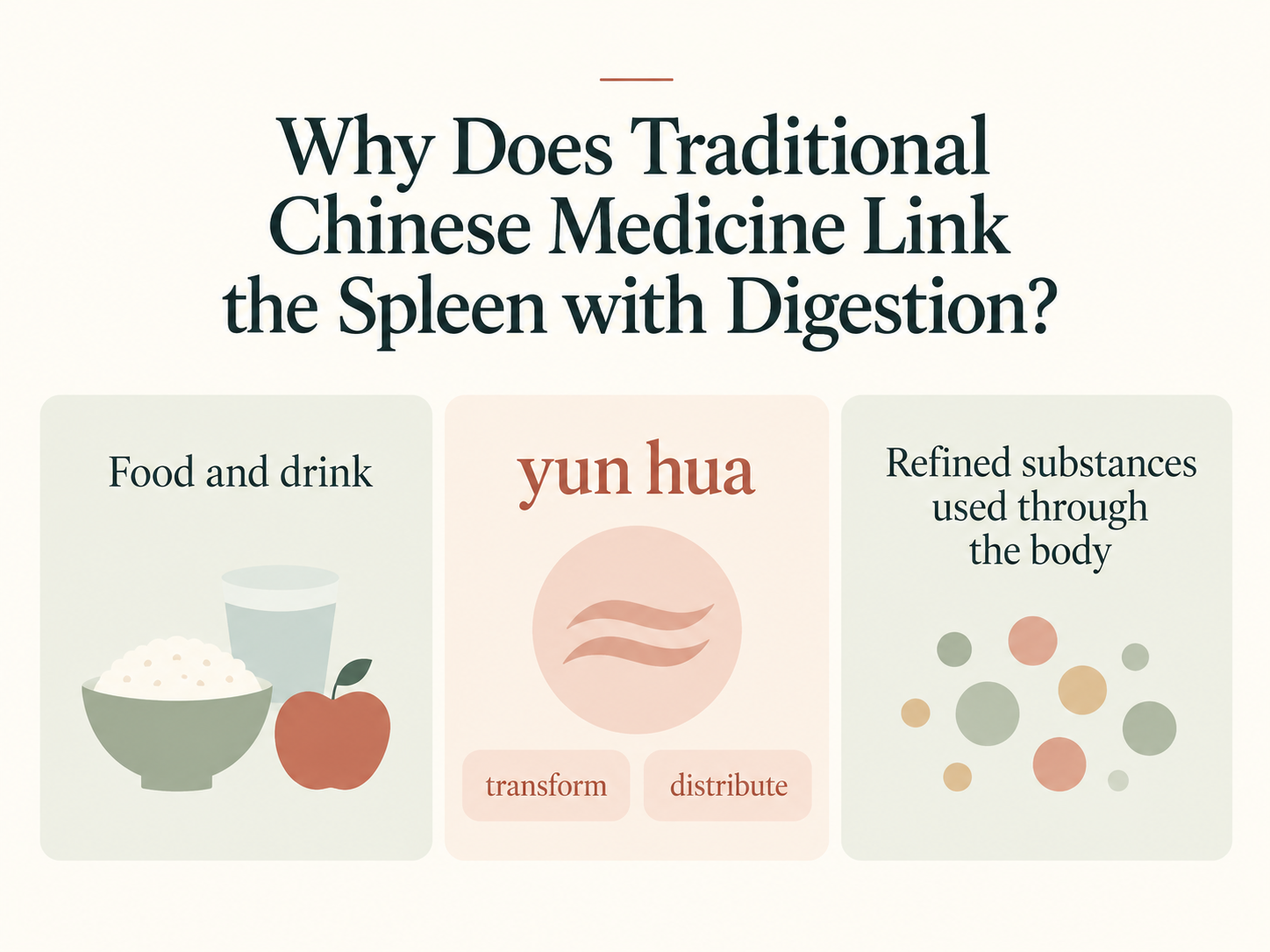
If a TCM text talks about the “Spleen,” it should not automatically be read as a statement about disease in the anatomical spleen.
If it talks about the “Liver,” it should not automatically be translated into a biomedical statement about the anatomical liver.
The traditional term has to be understood inside the system in which it is being used.
This is one reason Traditional Chinese Medicine can seem confusing when its vocabulary is translated directly into English.
The words look familiar.
But familiar words can carry a different conceptual map.
Once you know that, many TCM descriptions become easier to read.
Instead of asking:
“Which modern organ does this word equal?”
a better first question is:
“What does this organ concept include within the traditional system?”
And that leads to the next question:
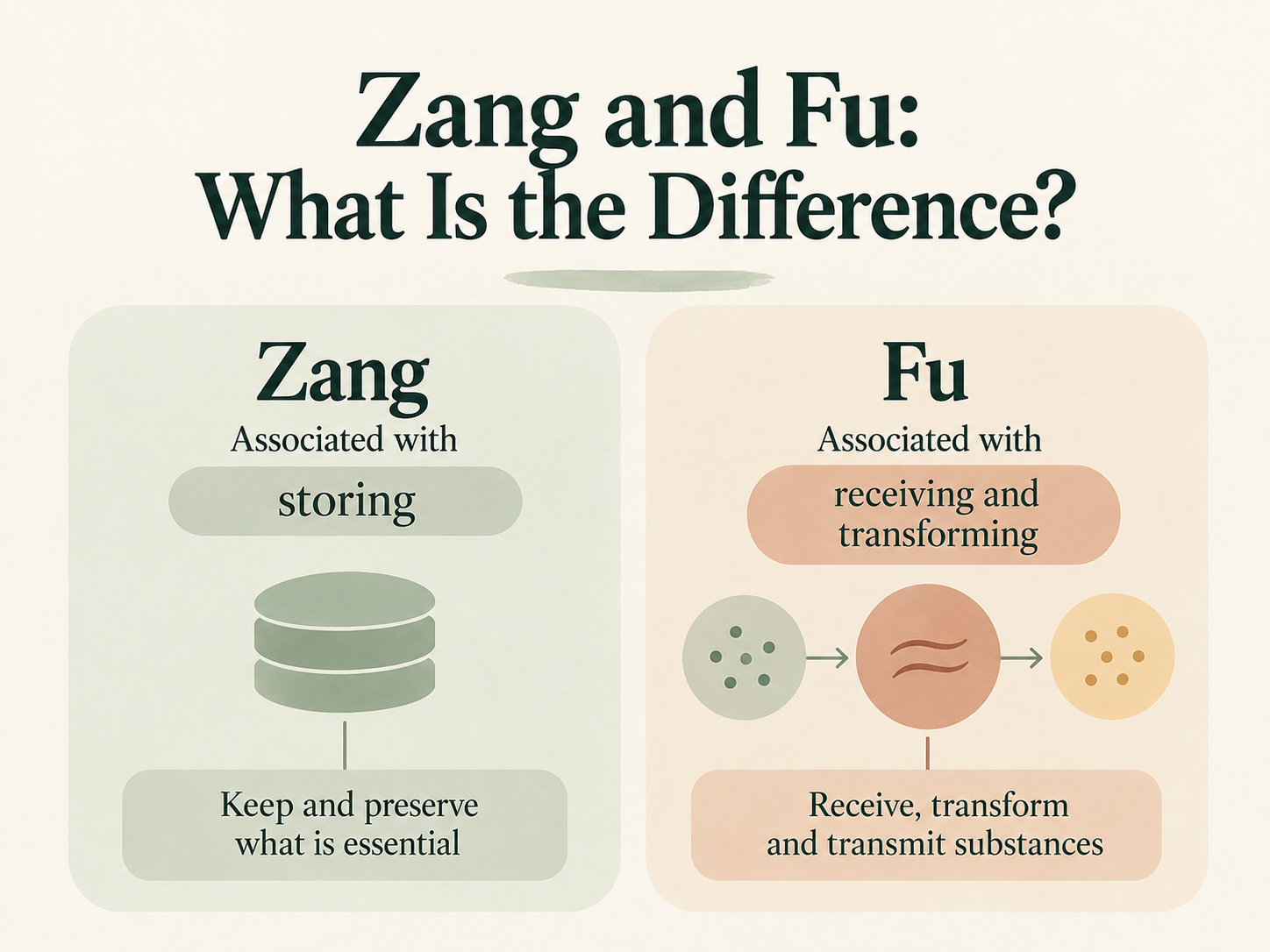
What makes something a Zang organ, and what makes something a Fu organ?
That is what we will look at next.