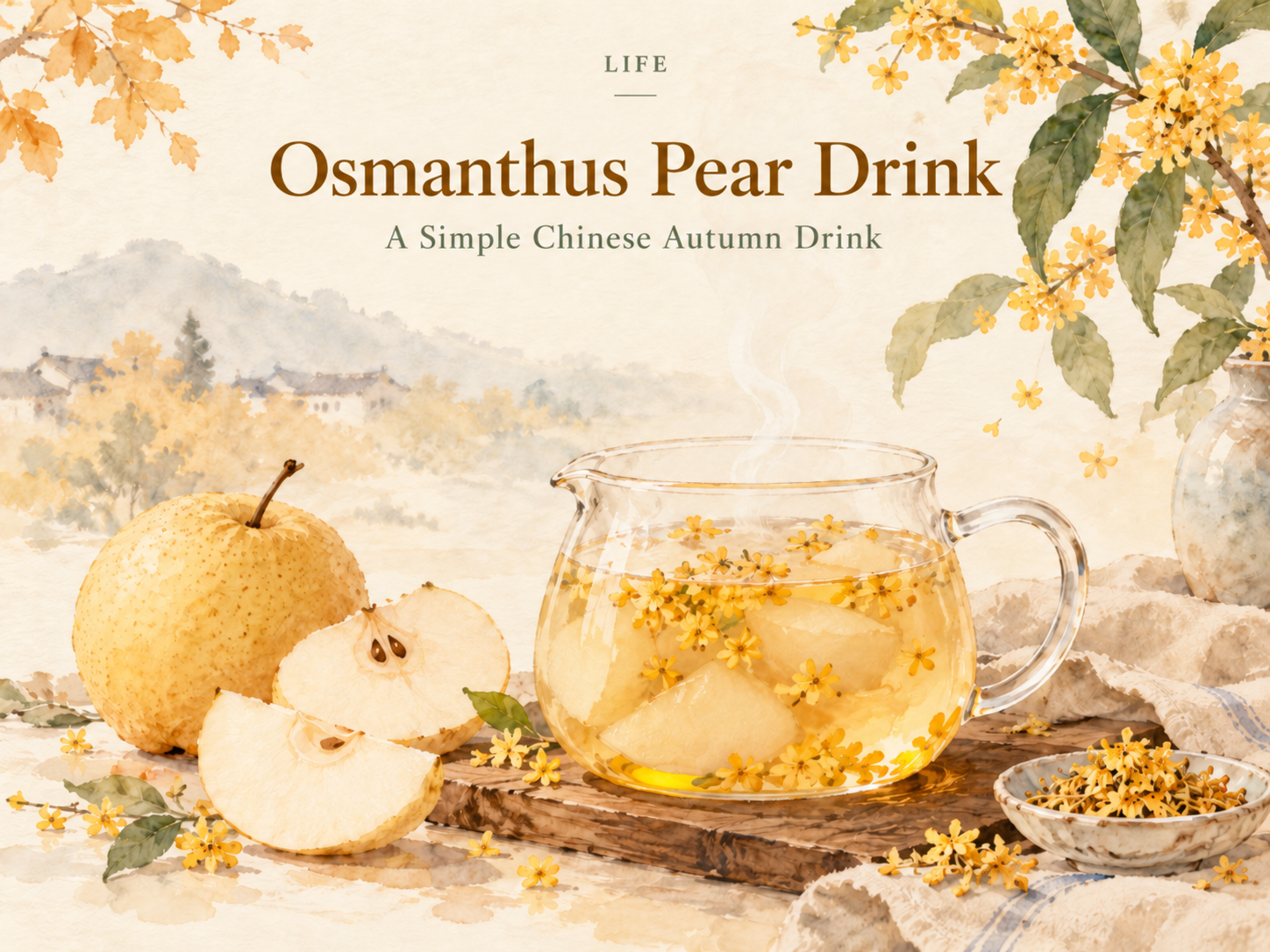
An everyday Chinese drink, and the traditional ideas behind autumn dryness.
Some autumn days in China announce themselves through scent. You may smell osmanthus before you notice the tiny yellow flowers among the leaves.
Osmanthus is not only something to admire. Its edible blossoms also appear in Chinese teas and desserts. Another simple way to enjoy them is in a warm pear drink.
Why pear? And what does a fragrant flower add?
1. Autumn Dryness and Jinye (津液)
Traditional Chinese Medicine (TCM) pays attention to the changing seasons and how people live with them.
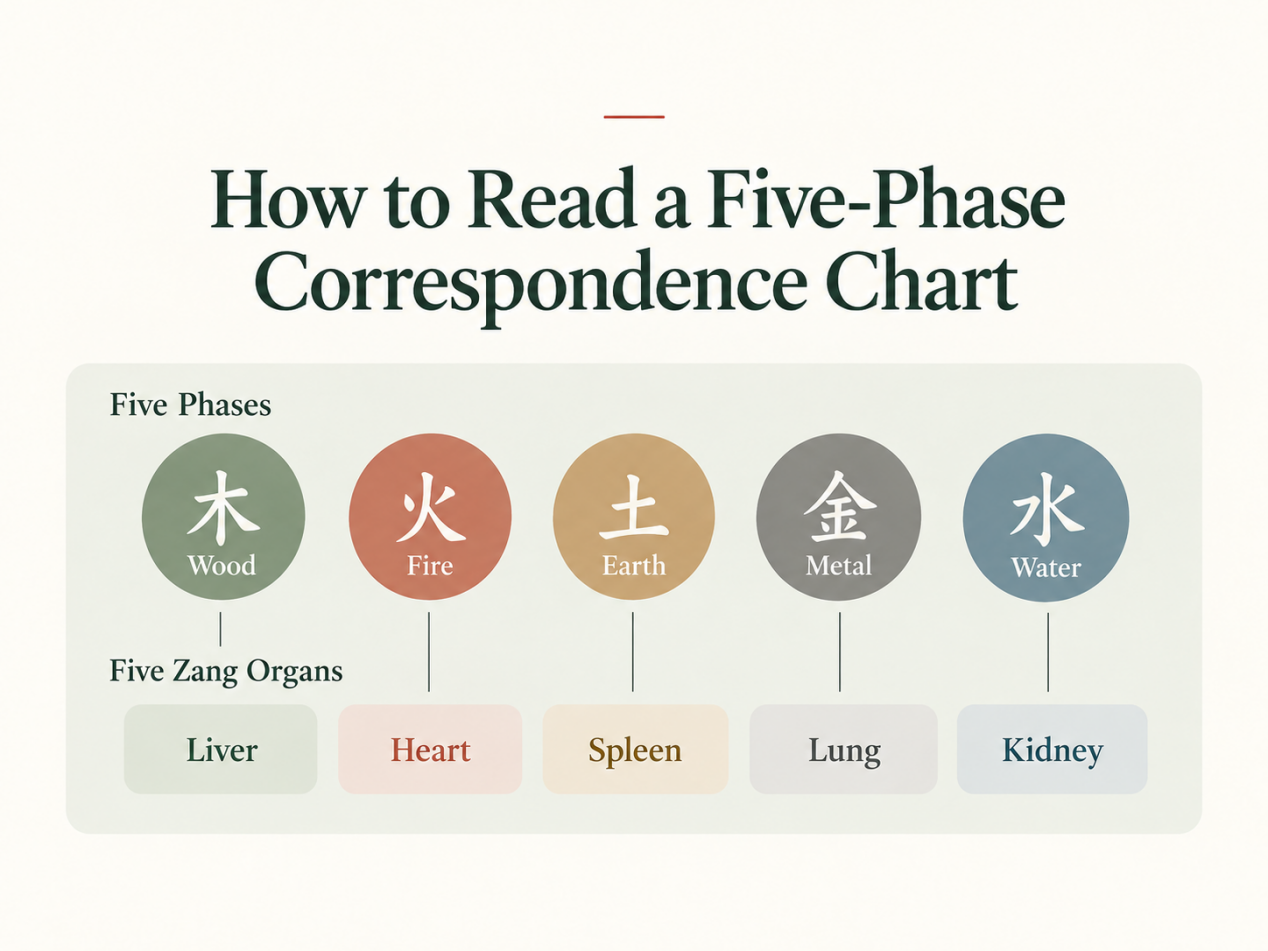
In the Five Phases (Wu Xing) framework, autumn corresponds to Metal and is associated with the Lung. The TCM Lung is part of a traditional system of functions and relationships, not simply the anatomical lungs.
Dryness is another important autumn association.
Think of a day when the air is dry and your lips or throat feel dry too.
Traditional Chinese Medicine uses the concept of jinye (津液) to explain how the body is moistened and nourished within its own theoretical framework.
In TCM, excessive dryness is understood as something that can affect jinye. This is one reason why traditional discussions of autumn food often emphasize moistening.
But autumn is not dry everywhere. The point is to notice the actual season around you, rather than follow a calendar mechanically.
2. Why Pear and Osmanthus?
In traditional Chinese food knowledge, pears are considered cooling and are associated with moistening dryness and promoting body fluids.
Osmanthus (Osmanthus fragrans) has a different character.
Li Shizhen's Bencao Gangmu (Compendium of Materia Medica) describes osmanthus blossoms as pungent and warm.
These are traditional classifications. “Pungent” does not necessarily mean a chilli-like taste, and “warm” does not simply mean the temperature of the drink.
In the kitchen, the distinction is easy to appreciate. Pear gives the drink a gentle fruity sweetness, while osmanthus adds its unmistakable fragrance.
Together, they make a lovely autumn drink. You can enjoy it without treating it as a medical remedy.
Recipe
3. Recipe: Osmanthus Pear Drink
Ingredients
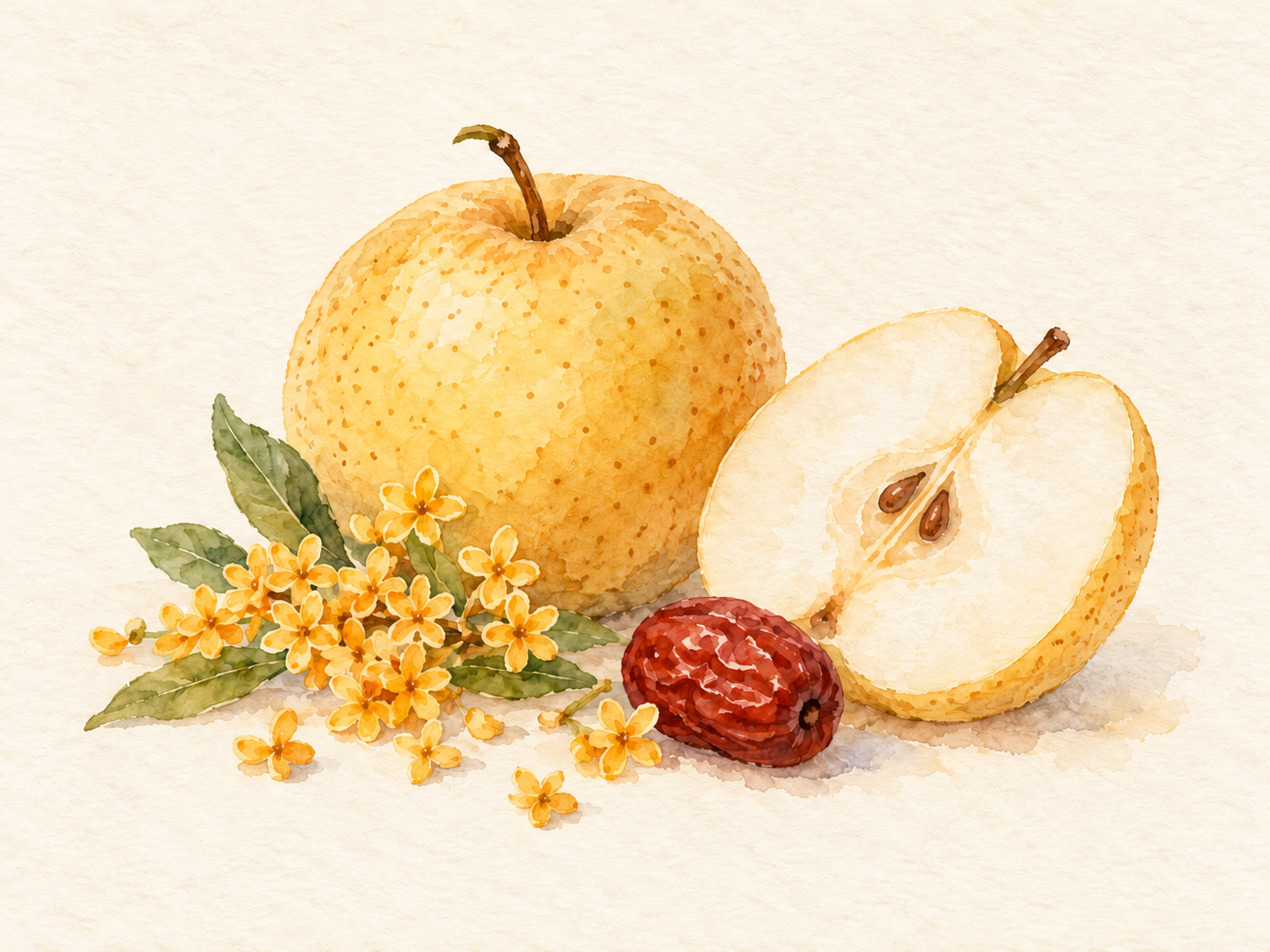
- Half a pear
- One small spoonful of food-grade osmanthus blossoms
- One red date (jujube)
- Rock sugar, to taste
- Water
Method
- Wash the pear and cut it into pieces, leaving the skin on. Split the red date.
- Put the pear, red date, and rock sugar into a pot. Add water and simmer for 10–15 minutes.
- Turn off the heat, add the osmanthus blossoms, cover, and let them steep for 2 minutes.
Use osmanthus sold for food preparation, rather than ornamental flowers collected outdoors.
4. A Small Taste of Autumn
A pear, a few blossoms, and a pot of warm water. There is nothing complicated about this drink.
Yet it offers a little glimpse of how traditional Chinese seasonal living connects food, the natural world, and the body.
Sometimes, understanding a culture begins with something as simple as the fragrance rising from a cup.
Related Reading
- How to Read a Five-Phase Correspondence Chart — Why autumn, Metal, and the Lung are connected in TCM.
- Why Traditional Chinese Medicine Organ Names Are Not the Same as Anatomical Organs — Understanding the TCM Lung in context.
- One Passion Fruit, Two Autumn Recipes — Explore autumn dryness and body fluids through another everyday ingredient.
References
- Compendium of Materia Medica (Bencao Gangmu), Wood Section I, entry on osmanthus blossoms.
- Hong Kong Department of Health, Chinese Medicine Regulatory Office, Health Preservation by Food in Chinese Medicine.