Have you ever heard someone say:
“Your Spleen and Stomach are not doing very well.”
If you know a little modern anatomy, you may immediately have a question.
Wait.
Isn’t the spleen just the spleen?
And the anatomical spleen is not what we usually think of as a major digestive organ.
So why does Traditional Chinese Medicine keep talking about the Spleen when it talks about digestion, eating, absorption, or fatigue?
This is exactly where the confusion begins.
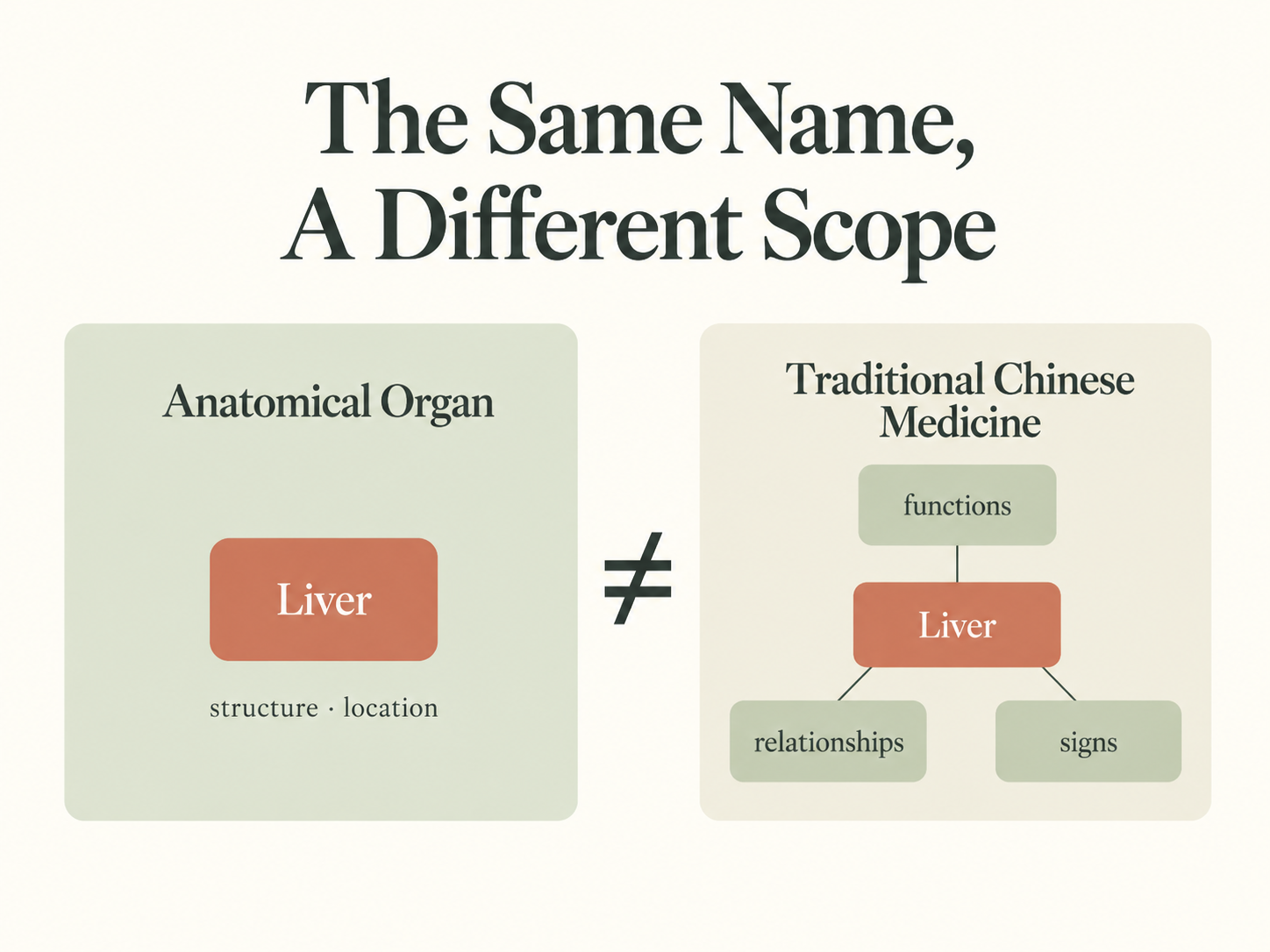
The anatomical spleen you are thinking of and the Spleen in Traditional Chinese Medicine are not exactly the same concept.
So what does the Spleen mean in TCM?
Start with one word:
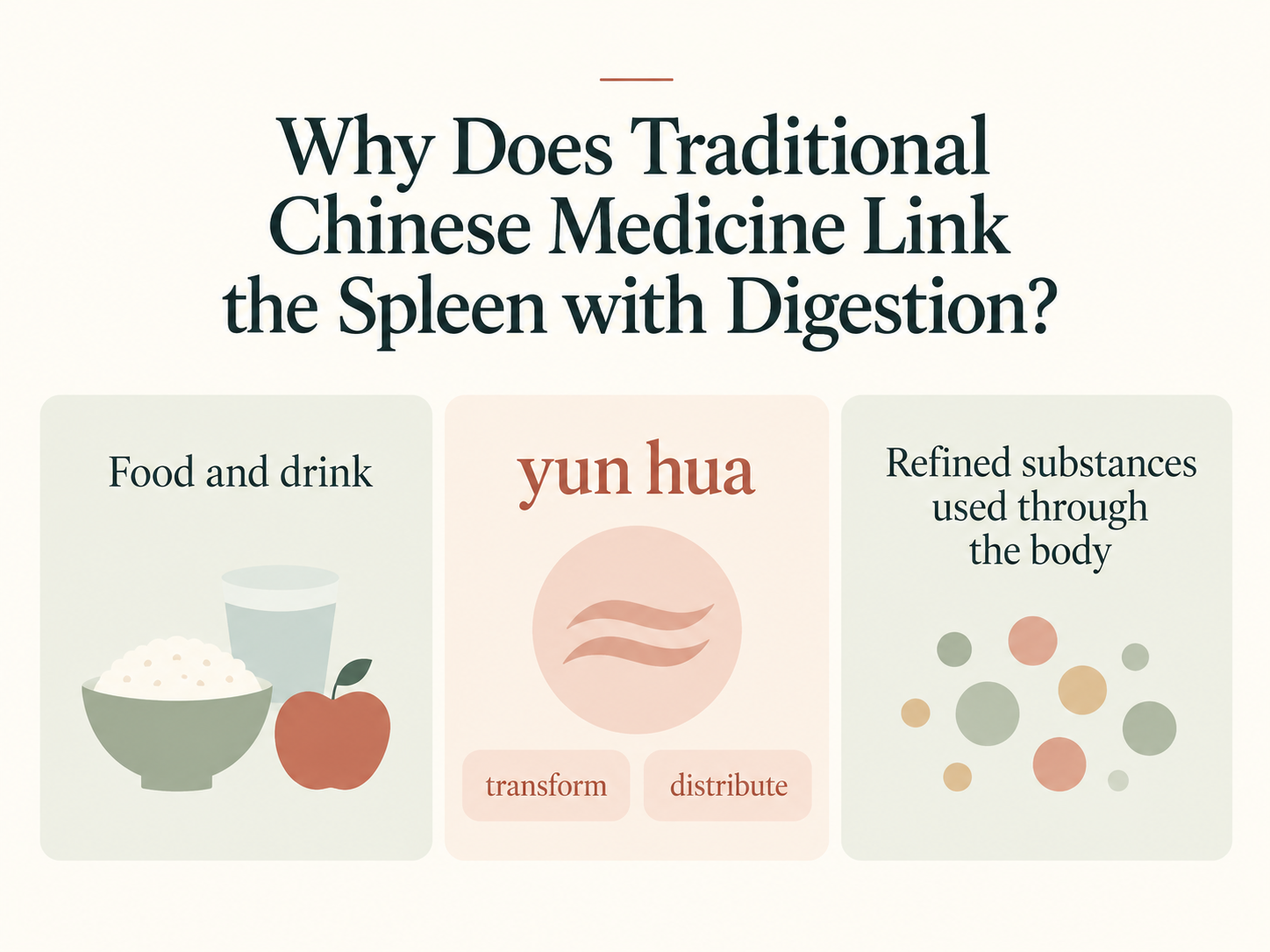
yun hua, 运化.
But yun hua still sounds abstract.
So let’s ask the question another way.
You ate the food. Then what?
Food enters the Stomach.
That part is easy to understand.
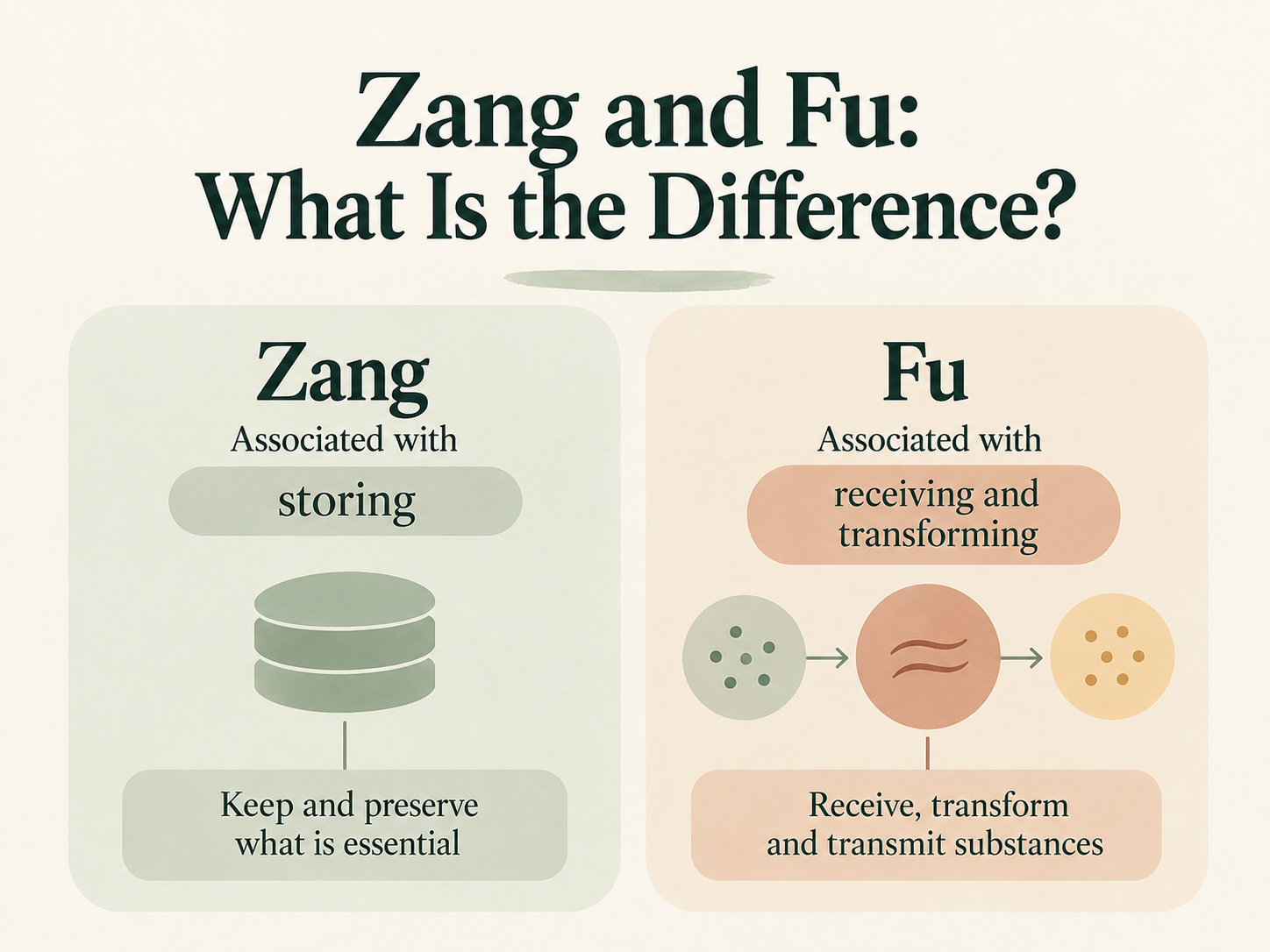
In Traditional Chinese Medicine, the Stomach is more about:
receiving what comes in and beginning to process it.
This is the idea behind receiving and processing food and drink.
But here is the next question:
Once the food has gone in, does that mean your body is already able to use it?
Of course not.
Something else still has to happen.
What you eat has to be transformed into refined substances that the body can use.
And those refined substances then have to be distributed through the body.
So the basic sequence is:
food goes in → it is transformed into refined substances → those substances are distributed through the body
That is why simply saying:
“In TCM, the Spleen is responsible for digestion.”
is too narrow.
Traditional Chinese Medicine is not only asking:
Did the food get in?
It also asks:
After it gets in, can the body transform it?
And then:
Once it has been transformed, can it be moved where it needs to go?
That is why yun hua is so important for understanding the TCM Spleen.
So can we just translate the TCM Spleen as the digestive system?
No.
That goes too far in the other direction.
TCM Spleen ≠ anatomical spleen
But also:
TCM Spleen ≠ modern digestive system
They come from two different ways of describing the body.
So instead of asking:
“Which modern organ does the TCM Spleen really correspond to?”
try asking a different question:
“What kind of functions and relationships does the Spleen describe in Traditional Chinese Medicine?”
Now the answer becomes a little clearer:
yun hua, 运化.
But then another, even stranger question appears.
If the Spleen is about food and yun hua, why does TCM also say that overthinking can affect the Spleen?
These two things do not seem to belong together at all.
One is about eating.
The other is about what happens in your mind.
How did they end up in the same conversation about the Spleen?
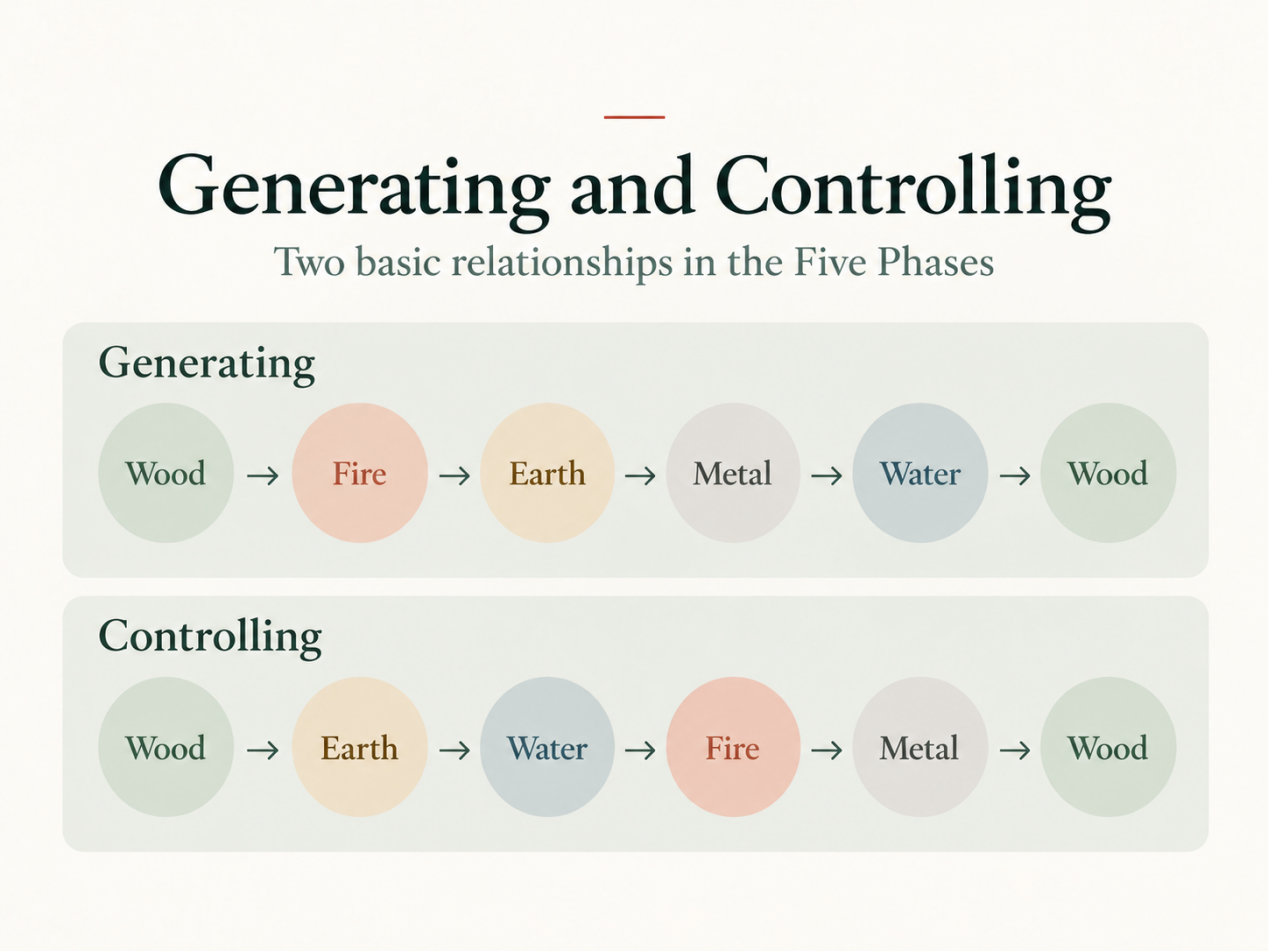
To understand that, we need to go back to the Five Phases.
In the correspondence system we looked at earlier:
Earth → Spleen → thought
And another line is:
Wood → Liver → anger
The five zang organs and the five emotions are linked in the same sequence:
Liver, Heart, Spleen, Lung, Kidney → anger, joy, thought, grief, fear
So thought was not added to the Spleen later as a separate idea.
It is already part of the same Five-Phase and zang-organ correspondence system.
Does that mean thinking itself harms the Spleen?
No.
Normal thinking is not the problem.
The concern is:
excessive thinking.
Thinking that goes on and on.
Thinking that becomes difficult to put down.
That is the background to the traditional idea:
prolonged overthinking can affect the Spleen.
Now two things that looked completely unrelated begin to connect:
the Spleen governs yun hua
and:
the Spleen is associated with thought
What does any of this have to do with life today?
Modern life rarely gives us the luxury of simply sitting down and eating a meal.
You may be eating while replying to messages.
Still thinking about work.
Just finishing one problem and already planning the next.
Your body may be sitting at the table while your mind has never really stopped.
So a question like:
“Why does TCM connect overthinking with the Spleen?”
or:
“Can stress affect the Spleen in TCM?”
often comes from something very practical.
What someone may really be asking is:
Why does it sometimes feel as if, when I am under pressure and my mind will not stop, my eating and physical state change too?
Traditional Chinese Medicine looks at these things together:
eating, how the body makes use of what comes in, and prolonged mental preoccupation are not treated as three completely separate worlds.
That is also why the phrase “Spleen and Stomach” in TCM often means more than simply “I ate something that upset my stomach.”
So what does it actually mean when someone says, “Your Spleen and Stomach are weak”?
This is where we should not jump straight to a diagnosis.
It does not automatically mean:
there is something wrong with your anatomical spleen.
And it does not automatically mean:
you have a particular modern digestive disease.
In the same way, if you have been thinking a lot, feeling tired, or noticing changes in appetite, that does not mean you can simply conclude:
“I must have Spleen Qi deficiency.”
Terms such as “weak Spleen” and “Spleen Qi deficiency” belong to the diagnostic language of Traditional Chinese Medicine and need to be understood in a broader context.
The question this article is really trying to answer is much simpler:
When Traditional Chinese Medicine puts digestion, the Spleen, and overthinking in the same conversation, what is it actually talking about?
By now, we have an answer.
It is not saying that one anatomical organ is somehow responsible for both digestion and thinking.
It is placing:
yun hua, the Spleen, and thought
inside the same network of relationships.
One last question
Earlier, when we talked about the Five Phases, we saw that:
the Spleen belongs to Earth.
The Liver, which we will look at next:
belongs to Wood.
And in the Five-Phase relationship:
Wood controls Earth.
So here is the next question.
If Traditional Chinese Medicine links overthinking with the Spleen,
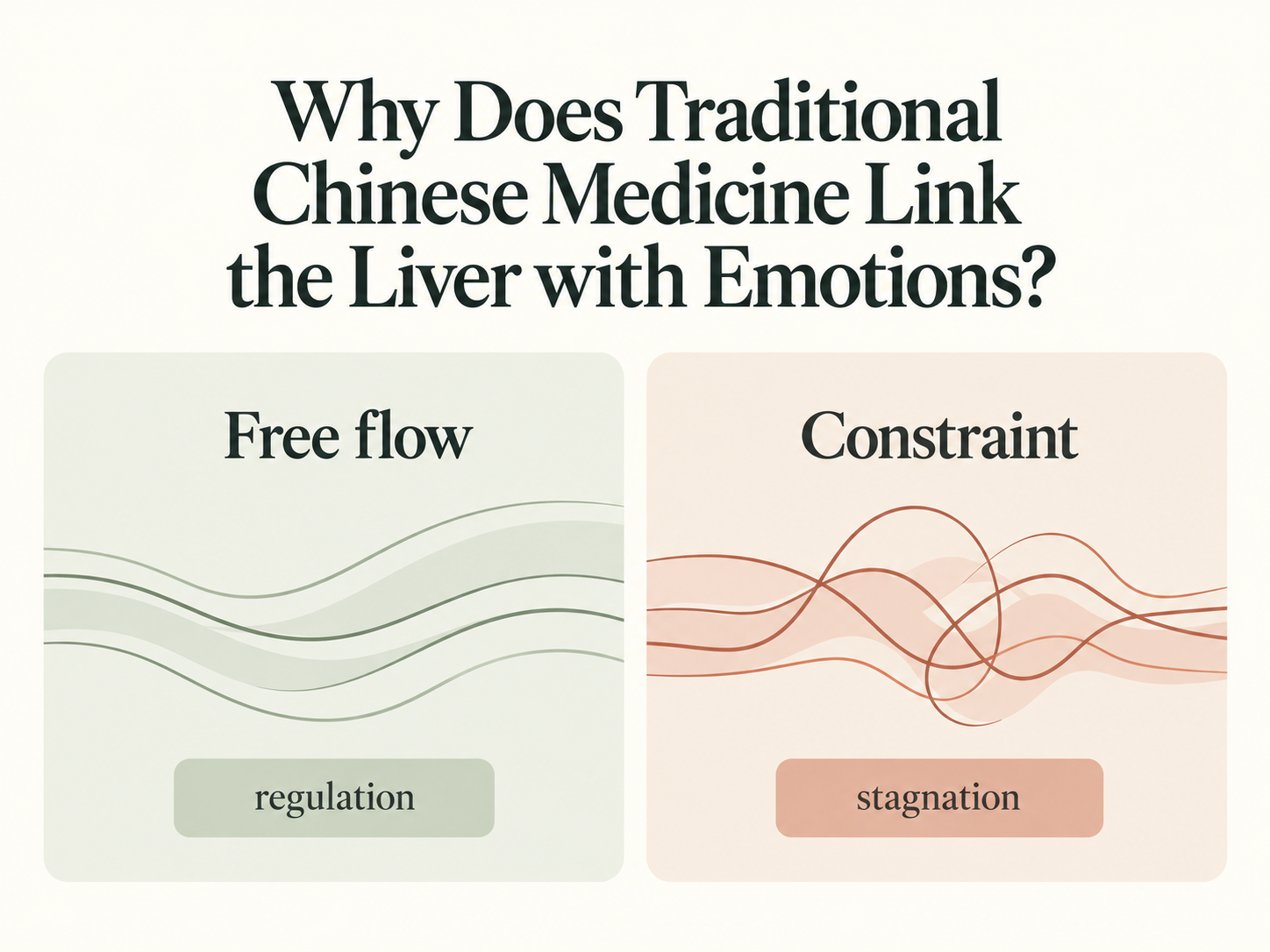
and links emotion, anger, and constraint with the Liver,
why does TCM sometimes talk about both the Liver and the Spleen or Stomach when someone is under a lot of stress?
Now we are no longer talking about two isolated organs.
We are moving into the relationship between:
Wood and Earth, Liver and Spleen, emotion and bodily function.
And that takes us directly to the next article:
Why Does Traditional Chinese Medicine Link the Liver with Emotions?