Have you ever heard someone say:
“Anger hurts the Liver.”
Or:
“Too much stress can lead to Liver Qi stagnation.”
If you know a little modern anatomy, you may immediately have a question.
Wait.
Isn’t the liver just an organ?
Anger is an emotion.
Stress comes from what is happening in your life.
So why does Traditional Chinese Medicine connect the Liver with anger, stress, and frustration?
The problem begins with the word itself.
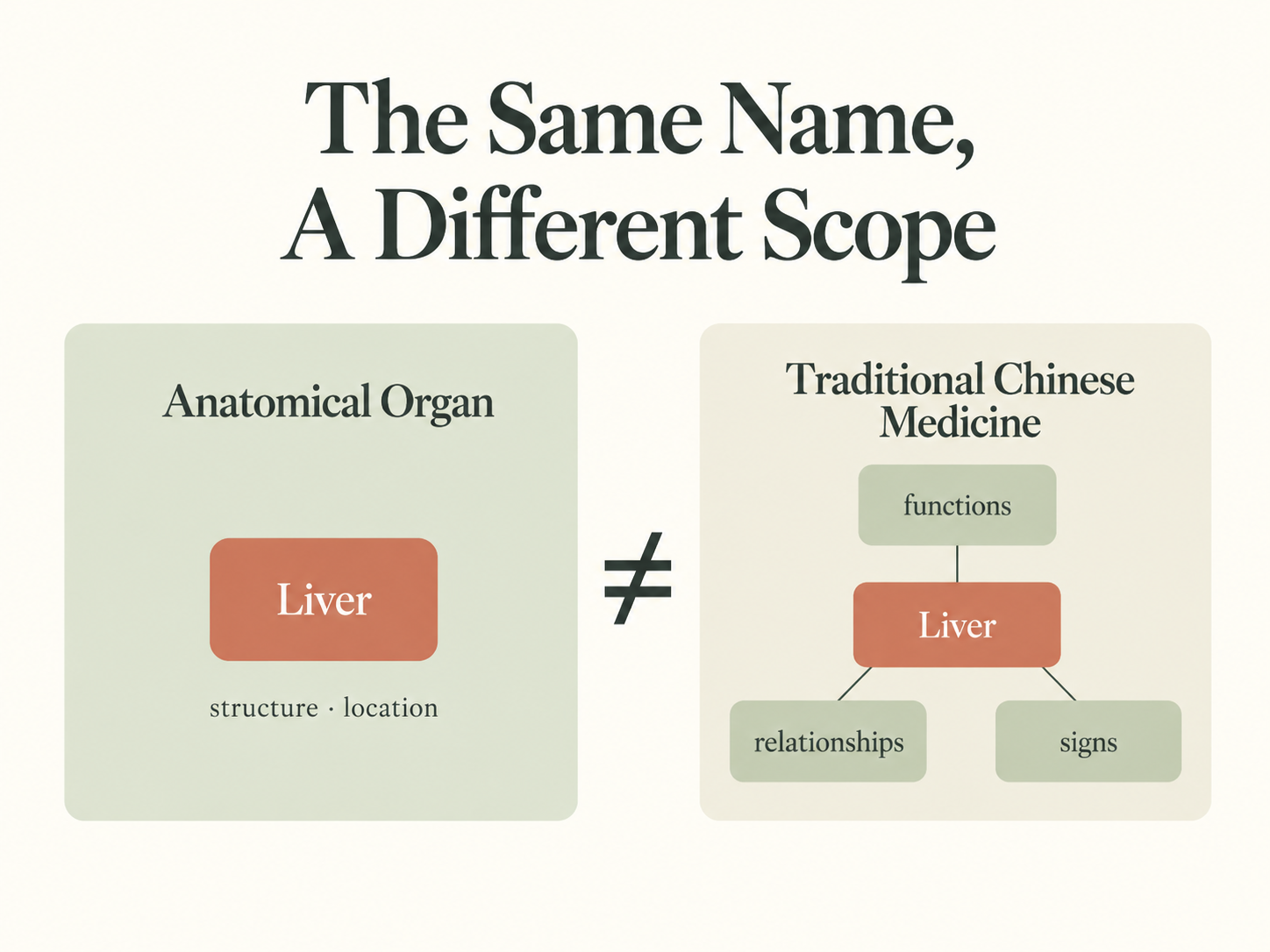
The anatomical liver and the Liver in Traditional Chinese Medicine are not exactly the same concept.
So what does the Liver mean in TCM?
Start with one word:
shu xie, 疏泄.
But shu xie still sounds abstract.
So let’s ask the question another way.
What does the Liver actually do when TCM says it governs shu xie?
In Traditional Chinese Medicine, shu xie is about:
regulating the movement of qi throughout the body.
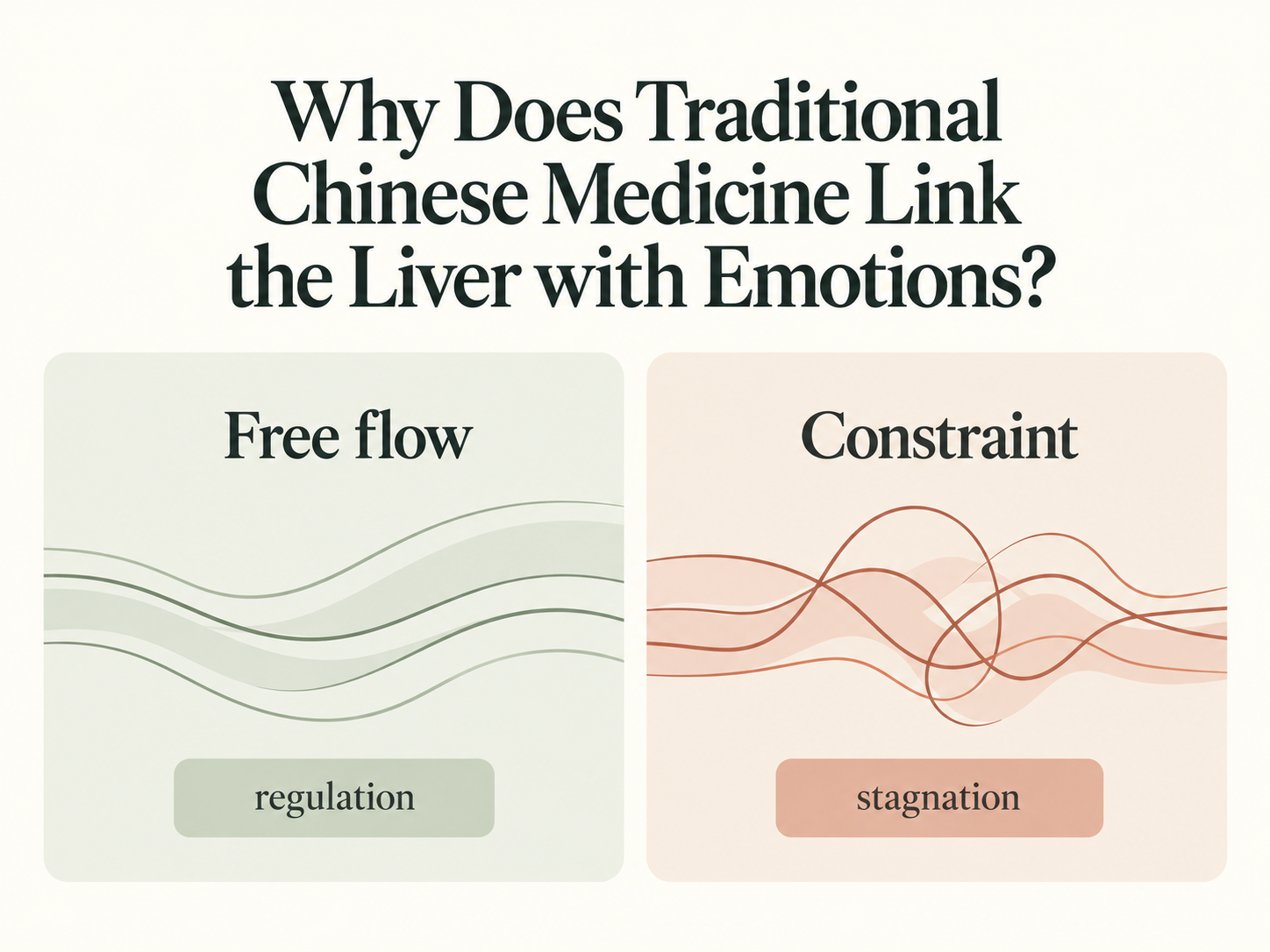
The key idea is that qi should move smoothly, without becoming constrained.
But wait.
Does that mean the Liver controls emotions?
Not exactly.
Emotional regulation is only one part of shu xie.
The same function is also connected with other processes, including supporting Spleen and Stomach functions involved in digestion.
So the Liver is not simply an “emotion organ.”
Then why do emotions enter the picture?
Why is anger linked with the Liver?
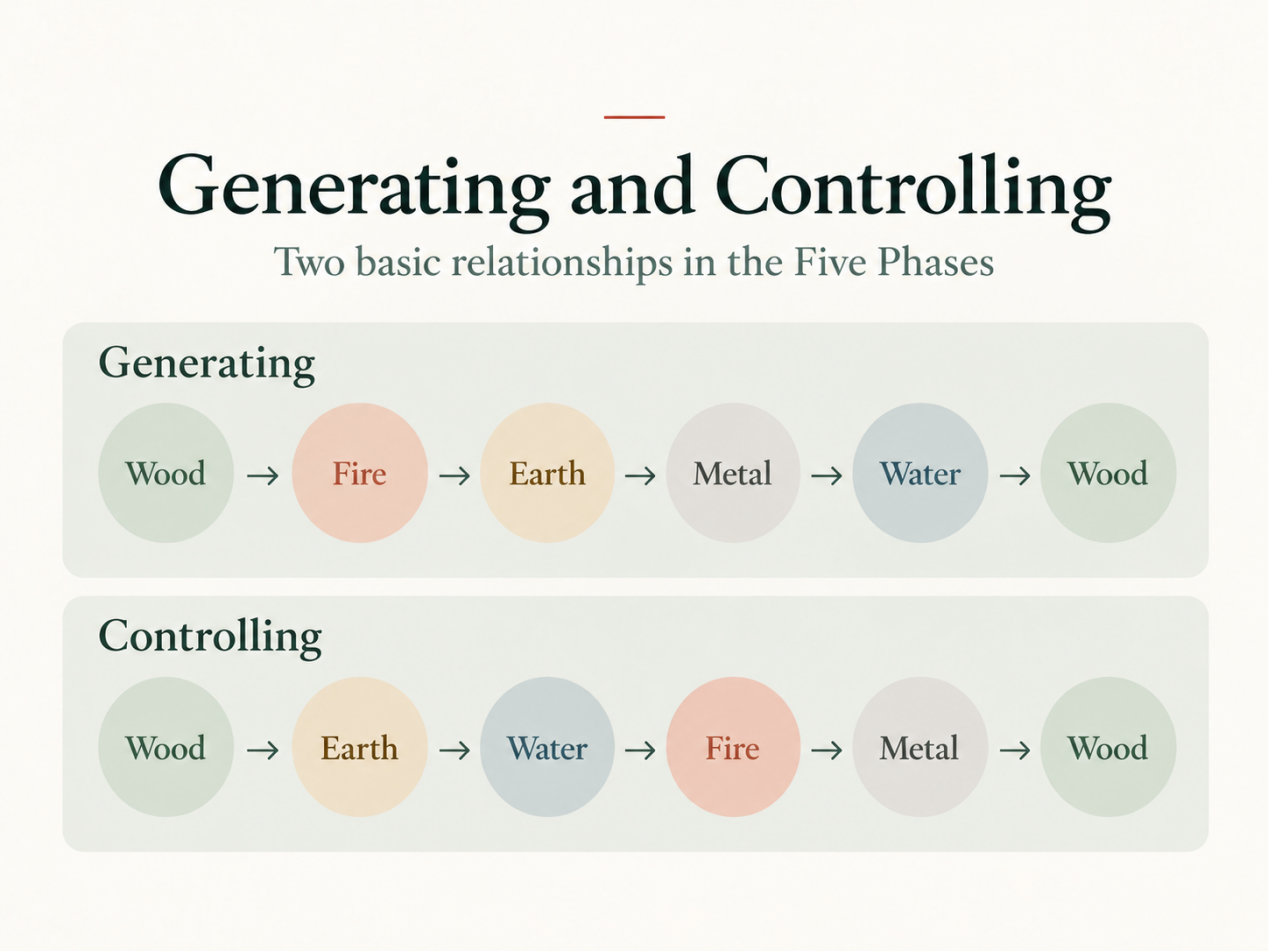
To understand that, we need to go back to the Five Phases.
In the correspondence system we looked at earlier:
Wood → Liver → anger
Just as we saw in the last article:
Earth → Spleen → thought
But why Wood?
Think about a growing branch.
It grows upward.
It reaches outward.
It stretches and bends.
Wood is associated with growth, rising, and free extension.
And the Liver is associated with the smooth movement of qi.
That is why Wood and Liver belong to the same correspondence group.
And within that group, anger is the emotion traditionally associated with the Liver.
But does that mean every time you get angry, you are harming your Liver?
Of course not.
Is anger itself the problem?
No.
Anger is a normal human emotion.
Sometimes something really is unfair.
Sometimes someone crosses a boundary.
Sometimes you have a very good reason to be angry.
Traditional Chinese Medicine makes an important distinction.
It is more concerned with anger that becomes:
excessive or uncontrolled
or:
held in and unresolved.
One direction is anger that becomes too intense.
The other is anger that stays constrained and does not resolve.
This is the background to the traditional idea of “anger hurting the Liver.”
So the question is not simply:
“I got angry today. Did I hurt my Liver?”
It is about what happens when anger becomes overwhelming or remains unresolved for a long time.
And that brings us to another phrase you may have heard.
What does Liver Qi stagnation mean?
Liver Qi stagnation is a common term in Traditional Chinese Medicine.
But what exactly is stagnating?
Remember the word shu xie?
It describes the regulation of qi movement.
When that movement is described as constrained or no longer flowing smoothly, TCM may use the term:
Liver Qi stagnation.
That does not mean there is literally a blocked pipe somewhere inside your body.
Now think about someone who has been under pressure for weeks.
There is too much to do.
Things keep going wrong.
They are frustrated, but they cannot really express it.
They want something to change, but they cannot change it yet.
So they keep going.
And keep holding everything in.
They may not say:
“I am angry.”
They may say:
“I feel tense all the time.”
“The smallest thing gets on my nerves.”
“I just feel stuck.”
This helps explain why stress, frustration, irritability, and Liver Qi stagnation often appear in the same conversation.
It does not mean these feelings automatically give someone a TCM diagnosis.
But it helps us understand why a person dealing with constant pressure might become curious about this traditional concept.
And there is another question.
Why does a conversation about emotions sometimes turn into a conversation about digestion?
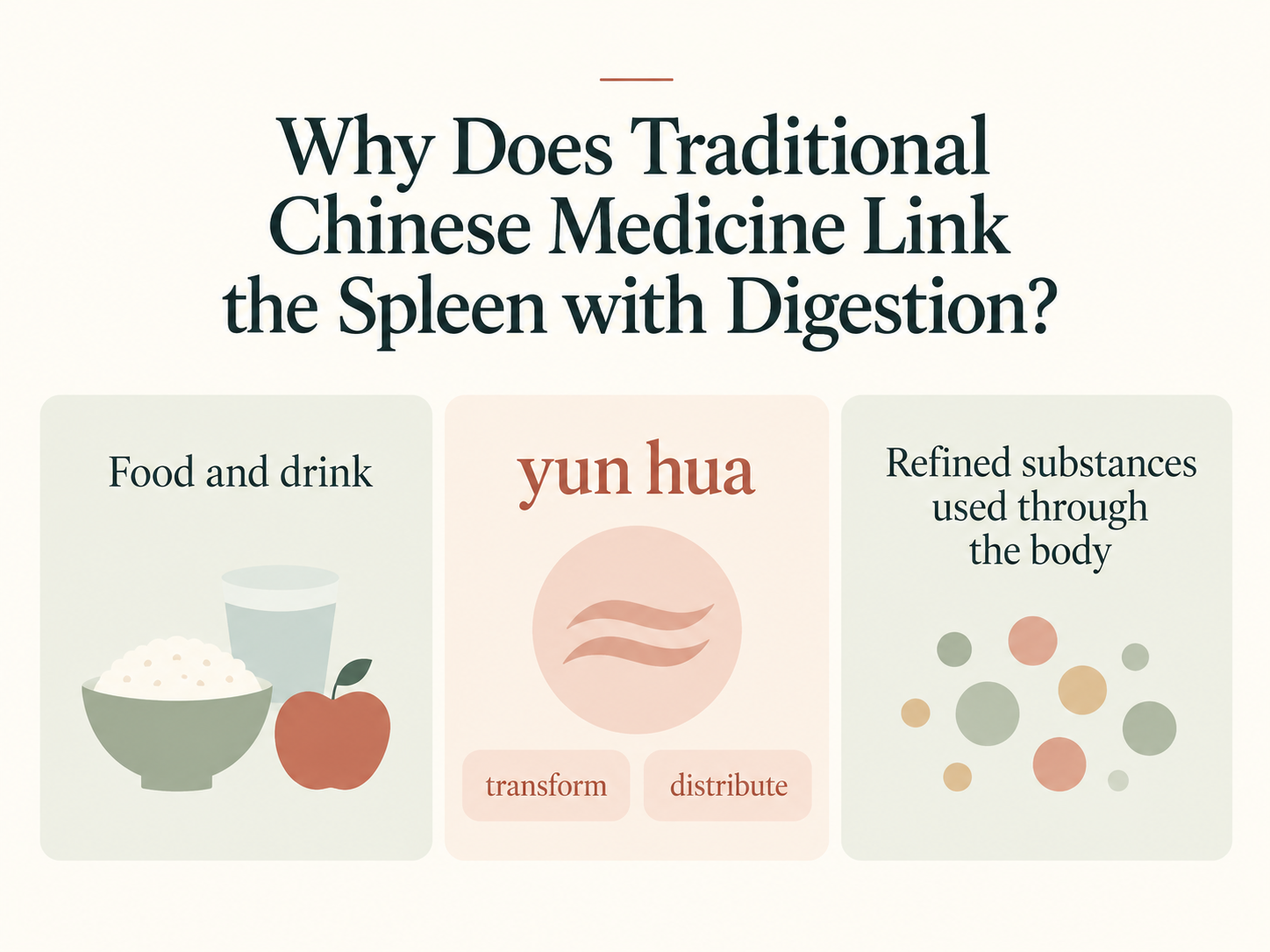
Remember the Spleen from the last article?
We talked about yun hua, the transformation and transportation of substances derived from food and drink.
Now we have the Liver and shu xie.
Here is the connection:
The Liver’s shu xie function is also associated with supporting Spleen and Stomach functions involved in digestion.
And if we return to the Five Phases:
Wood → Liver → anger
Earth → Spleen → thought
In the Five-Phase relationship:
Wood controls Earth.
So imagine someone who has been under a lot of stress.
They feel frustrated.
They cannot stop thinking.
Their appetite changes.
Eating becomes irregular.
Traditional Chinese Medicine may look at these experiences together rather than treating them as completely separate questions.
It may consider the relationship between:
Liver and Spleen
Wood and Earth
emotion and digestion
That does not mean every stressed person has a Liver or Spleen disorder.
It means these functions are connected within the traditional system.
And now the last two articles come together.
In the previous article, we asked why the Spleen is linked with digestion and thought.
In this one, we asked why the Liver is linked with anger and emotional strain.
The connection is not that two anatomical organs somehow control our thoughts and feelings.
It is that Traditional Chinese Medicine uses the relationships between these functions to understand why different aspects of our bodily and emotional lives may be considered together.